If you’ve spent any time looking at Pokémon binder pages online, you’ve probably come across the Michi Method without knowing what it was called. The method was popularized by @peeplop on Instagram and it’s taken off in the collector community in a big way. Here’s everything you need to know to try it yourself!
Table of Contents
- What is the Michi Method?
- Michi Method Binder Planning
- Michi Method Layout Ideas
- Binders for the Michi Method
- Michi Method Supplies
- Michi Method Dimensions & Sizing
- Michi Method Templates
- Michi Method Art
- Michi Method Discord
We’re a small team of two and our links keep woahpoke running. As an eBay Partner Network affiliate, we earn from qualifying purchases at no additional cost to you. Learn more.
What is the Michi Method?
The Michi Method is a binder organization approach where instead of filling every pocket with a single card, you treat the whole page as a canvas. Cards, printed artwork panels, and empty space all get placed on purpose, so the page looks curated rather than just stored.
It takes more planning than a standard layout, but once you try it it’s hard to go back! The most common techniques:
- Custom inserts: Printed artwork or extended card art.
- Spanning artwork: One piece spread across two, four, or more pockets to make a larger panel in the page.
- Mixed cards and panels: Portrait cards, landscape cards, and artwork panels in the same spread.
- Intentional empty space: Pockets left empty on purpose so cards have room to breathe.
How to Plan Your Michi Method Binder
The easiest way to plan your pages is with our free Michi Method template. It’s a binder planner with the Michi Method built in, so you can map out where every card, art panel and empty slot goes before you print or cut anything. It saves a lot of time and paper!
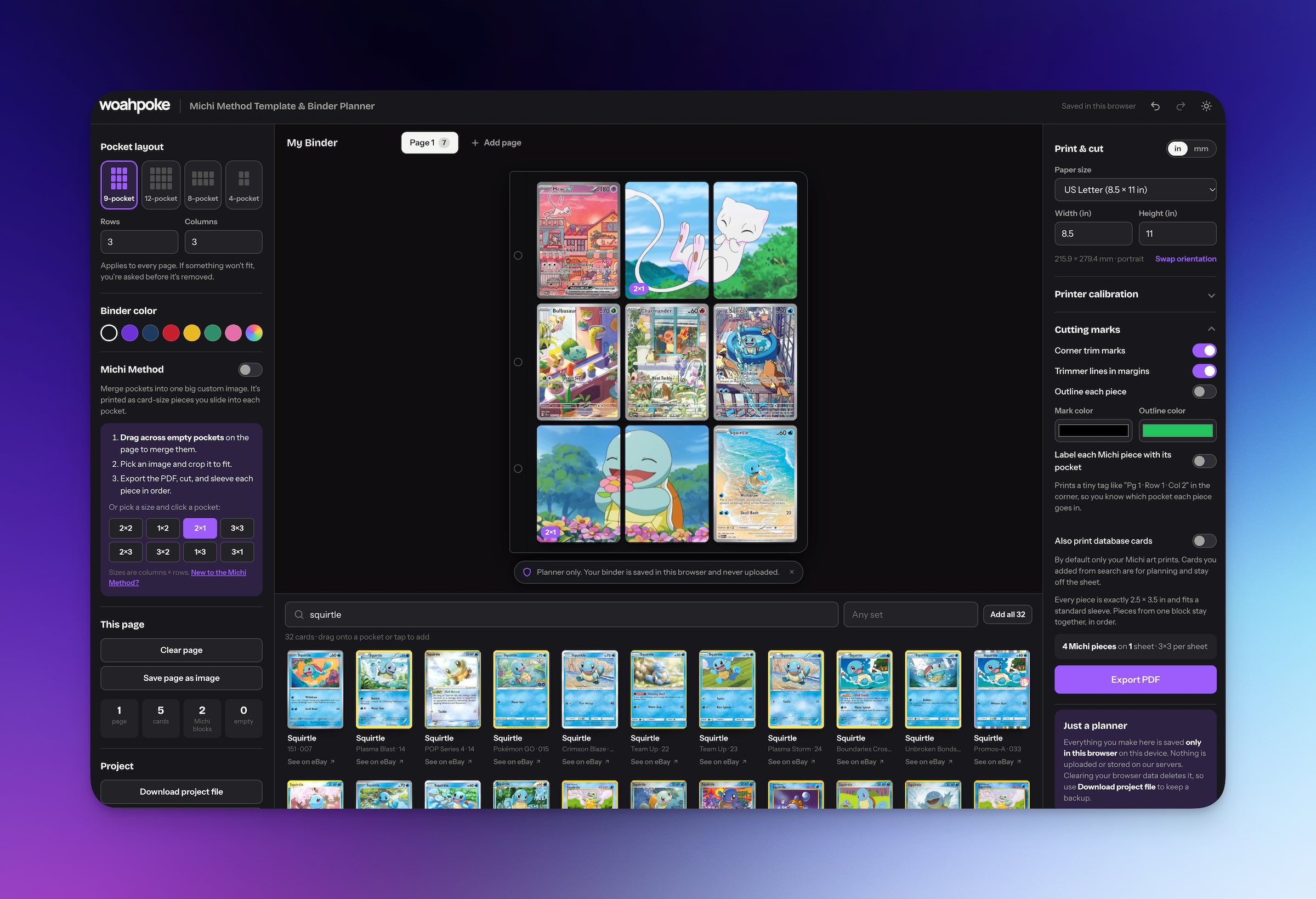
- Go to Michi Method Planner
- Choose your binder layout. Pick 9-pocket or 12-pocket to match your binder, so your plan lines up with your real pages.
- Search for your cards. Look up any Pokémon card by name or set and drag it into a pocket. It’s a great way to see how a page comes together before you buy or pull anything.
- Add your cards and art. Place your cards first, then fill in around them with art panels until the spread feels right.
- Export your PDF. Your art prints as card-size pieces with cut lines marking exactly where to trim, so all that’s left is to cut and slide each piece into its pocket. You can also save your project file to revisit later if it’s WIP.
Michi Method Layout Ideas
There’s no right way to Michi, part of the appeal is that every binder is unique! That said, here are some popular approaches in the community to get started:
Single Pokémon Layout
Pick a Pokémon and dedicate the whole page to them, whether it’s the named card or a cameo appearance. Eevee, Pikachu, Clefairy, or any of your favourite Pokémon make great starting points, and the variety of art styles across different sets keeps each one feeling fresh!
Cards Shown:
- Pikachu · Generations Radiant Collection #RC29 on eBay
- Pikachu · Sun & Moon Promos #SM206 on eBay
- Birthday Pikachu · Celebrations #24 on eBay
- Pikachu · Hidden Fates #19 on eBay
- Pikachu · Sun & Moon Promos #SM162 on eBay
- Pikachu · SWSH Black Star Promos #SWSH020 on eBay
- Mega Clefable ex · Perfect Order #119 on eBay
- Lillie’s Clefairy ex · Ascended Heroes #280 on eBay
- Lillie’s Clefairy ex · Journey Together #184 on eBay
- Lillie’s Clefairy ex · Scarlet & Violet Promos #SVP195 on eBay
- Lillie’s Clefairy ex · Journey Together #173 on eBay
- Clefairy · Perfect Order #094 on eBay
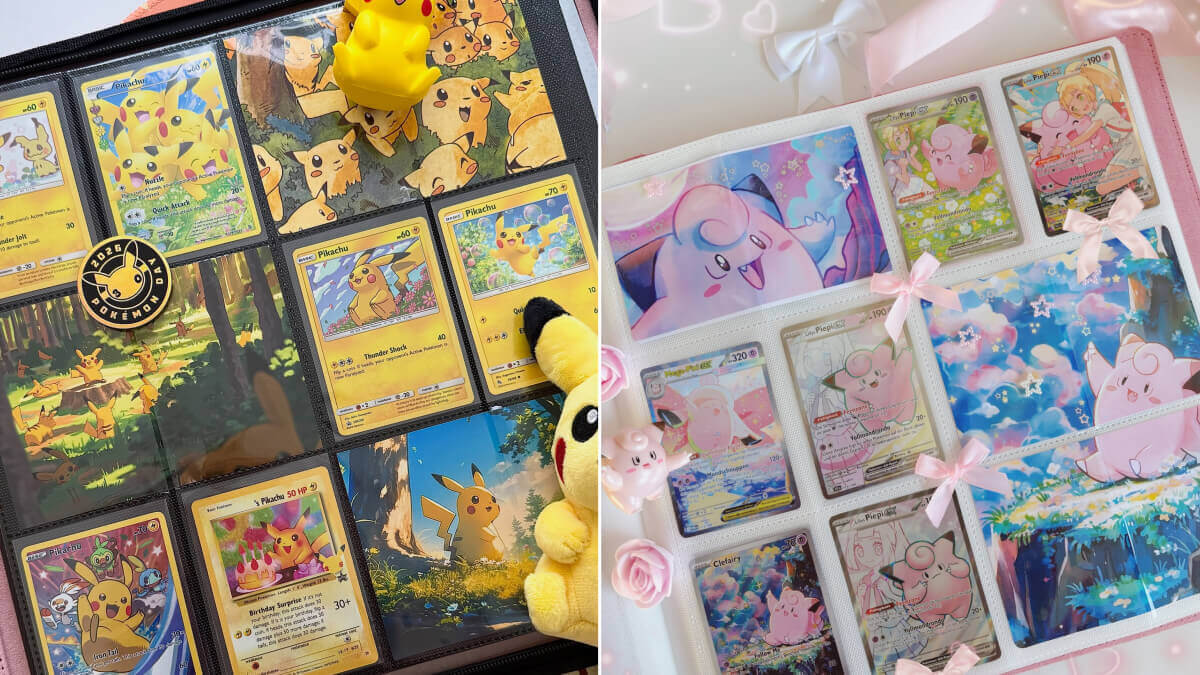 Layouts by @feyaquinntcg and @vanidough
Anchor Layout
This is a great way to highlight a card you really love. Try placing one or two hero cards at the center of the page, surrounded by complementary cards, empty space, or artwork inserts that frame them.
Cards Shown:
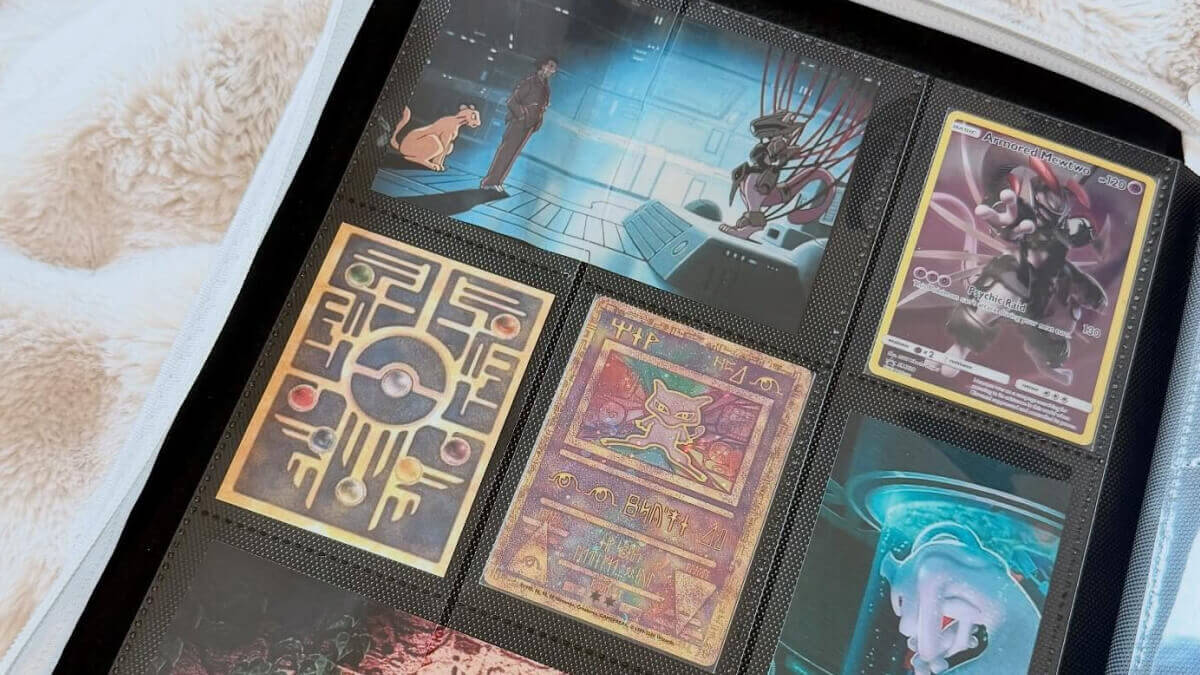 Layout by @cgcollectrs
Themed or Story Layouts
We love themed binder pages, and this is where things get really fun. Cards arranged to tell a visual story or follow a theme, like a Studio Ghibli inspired spread, a progression from Eevee through its evolutions, or a trainer alongside their signature Pokémon. The possibilities are pretty much endless!
Cards Shown:
- Pikachu · Chinese 151 Collect #170 on eBay
- Pikachu · Chinese 151 Collect #171 on eBay
- Pikachu · Chinese 151 Collect #172 on eBay
- Pikachu · Chinese 151 Collect #173 on eBay
- Drampa · Temporal Forces #184 on eBay
- Altaria ex · Paradox Rift #253 on eBay
- Beedrill V · Astral Radiance #161 on eBay
- Gardenia’s Vigor · Crown Zenith Galarian Gallery #GG61 on eBay
- Grotle · Temporal Forces #164 on eBay
- Slakoth · Surging Sparks #212 on eBay
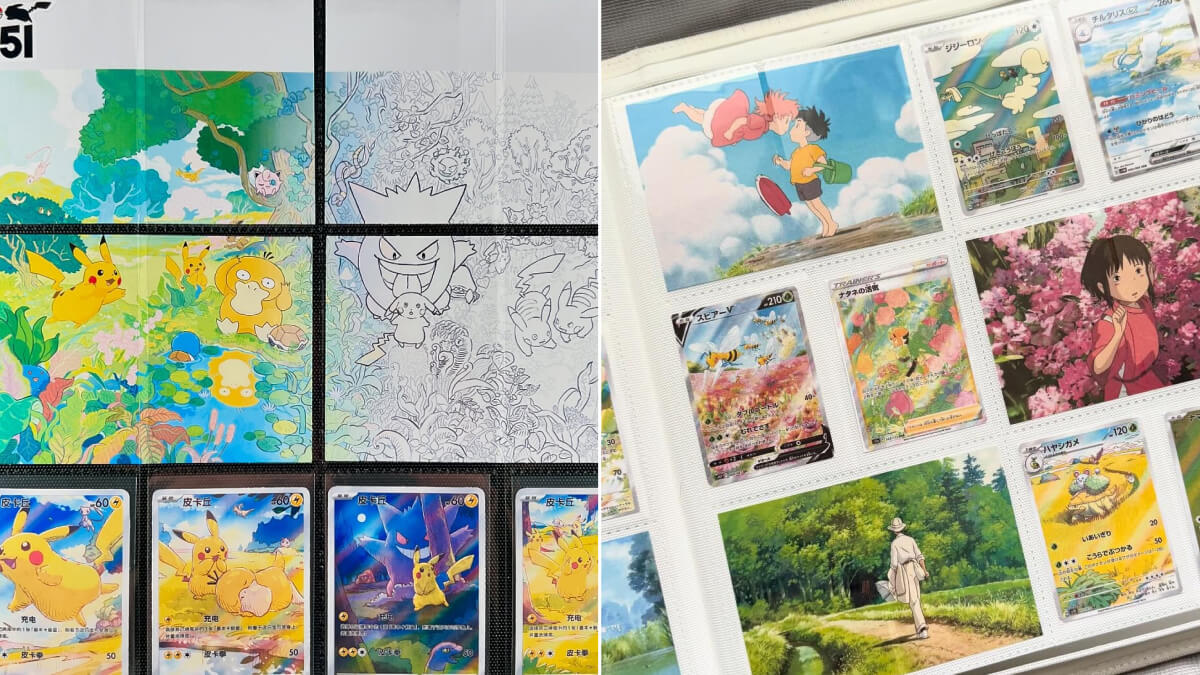 Layouts by @peeplop and @shiningsaku
Card Artist Layout
Dedicating a page to a single illustrator is one of the most rewarding ways to collect. We love these Shinji Kanda and Tomokazu Komiya themed pages (two of our favourite artists) and both have such distinctive styles that look incredible displayed together. Once you start noticing illustrator credits on cards, it’s hard to stop!
We have a full post on the best Pokémon card artists and illustrators if you want to find your new favorite to build a page around!
Cards Shown:
- Oricorio ex · Mega Evolution Promos #MEP024 on eBay
- Seismitoad · Black Bolt #105 on eBay
- Roaring Moon ex · Prismatic Evolutions #162 on eBay
- Giratina V · Lost Origin #186 on eBay
- Magikarp · Paldea Evolved #203 on eBay
- Oricorio · Crown Zenith Galarian Gallery #GG04 on eBay
- Drowzee · Scarlet & Violet #210 on eBay
- Jynx · Silver Tempest #062 on eBay
- Gastly · 151 #092 on eBay
- Haunter · 151 #093 on eBay
- Gengar · 151 #094 on eBay
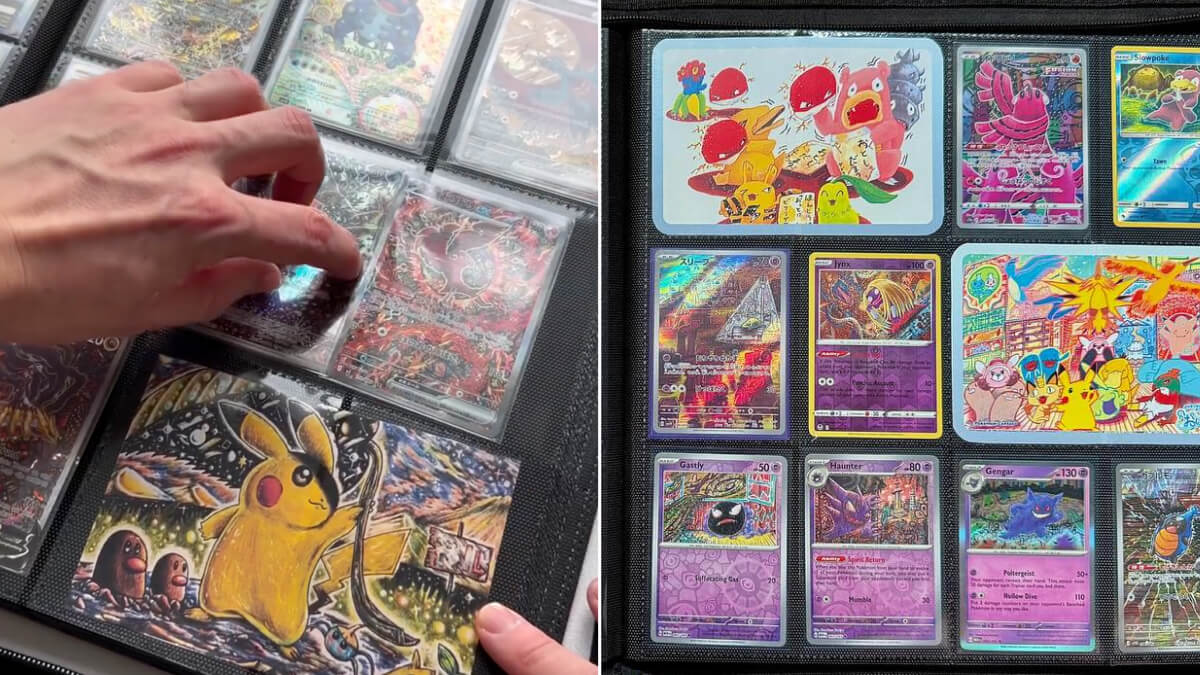 Layouts by @epic_robs and @xzuyyu
Trainer Layout
Pick a trainer you love, Misty, Erika, N, Cynthia, or any of your faves, and build the whole page around them with their signature Pokémon, trainer cards, and any art that places them in the same scene together!
Cards Shown:
- N’s Zorua · Scarlet & Violet Promos #SVP189 on eBay
- N’s Zoroark ex · Ascended Heroes #286 on eBay
- N’s Zekrom · Mega Evolution Promos #MEP031 on eBay
- N’s Reshiram · Journey Together #167 on eBay
- N’s Plan · Black Bolt #163 on eBay
- Zekrom · Brilliant Stars Trainer Gallery #TG05 on eBay
- Starmie · Legends Awakened #71 on eBay
- Psyduck · Triumphant #74 on eBay
- Politoed · Guardians Rising #25 on eBay
- Water Energy · Base Set #102 on eBay
 Layouts by @seraveon and @ceruleancitylocal
Full-Page Spread
This is a great statement layout. A single large piece of artwork spans the majority or all of the page, with a couple actual cards placed within it as accents. The cards become part of the scene rather than the focal point, which works really well when the insert art and the cards share a theme or color palette.
Cards Shown:
- Dedenne GX · Unbroken Bonds #195a on eBay
- Altaria · Silver Tempest Trainer Gallery #TG11 on eBay
- Altaria · Generations Radiant Collection #RC24 on eBay
- Pikachu · Generations Radiant Collection #RC29 on eBay
- Sylveon EX · Generations Radiant Collection #RC32 on eBay
- Dedenne · Generations Radiant Collection #RC10 on eBay
- Chatot · Temporal Forces #181 on eBay
- Ambipom · Pokémon GO #057 on eBay
- Swablu · BREAKthrough #124 on eBay
- Swablu · Roaring Skies #73 on eBay
- Eevee (Yu Nagaba) · Japanese Promo #062/SV-P on eBay
- Reshiram ex · White Flare #173 on eBay
 Layouts by @peeplop
Color-Themed Layout
One of the most visually striking pages you can build, and a great starting point if you’re new to the Michi Method. Choose cards that share a color palette and fill the remaining slots with tonal inserts to tie everything together. You’ll get a spread that feels like one cohesive piece when you open up your binder!
Cards Shown:
- Bulbasaur · Mega Evolution Promos #MEP037 on eBay
- Charmander · Mega Evolution Promos #MEP038 on eBay
- Squirtle · Mega Evolution Promos #MEP039 on eBay
- Turtwig · Mega Evolution Promos #MEP040 on eBay
- Chimchar · Mega Evolution Promos #MEP041 on eBay
- Piplup · Mega Evolution Promos #MEP042 on eBay
- Rowlet · Mega Evolution Promos #MEP043 on eBay
- Litten · Mega Evolution Promos #MEP044 on eBay
- Popplio · Mega Evolution Promos #MEP045 on eBay
- Articuno · Journey Together #161 on eBay
- Dragonair · 151 #181 on eBay
- Spheal · Surging Sparks #199 on eBay
- Frillish · White Flare #126 on eBay
- Garbodor · Paradox Rift #204 on eBay
- Poliwhirl · 151 #176 on eBay
- Vaporeon VMAX · SWSH Black Star Promos #SWSH182 on eBay
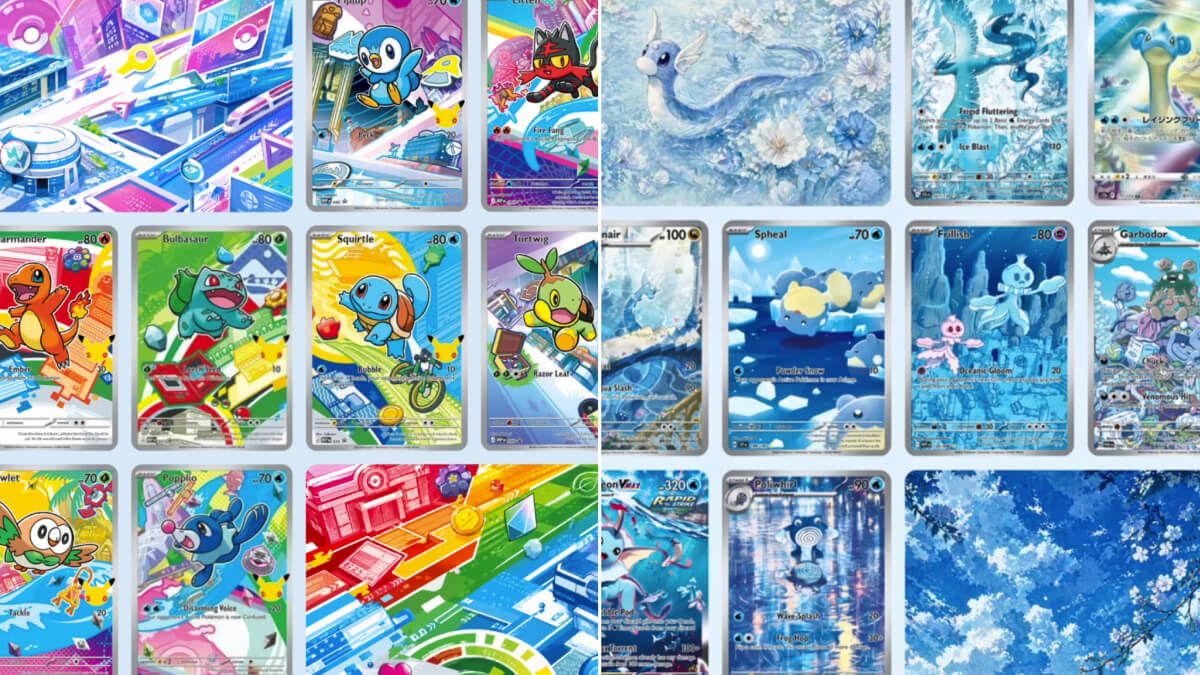 Layouts by @katarzynstudio
Art-Inspired Pokémon Cards Layout
Some cards are direct nods to famous artworks and art movements, and putting a few of them on one page gives you a spread that feels like a tiny gallery wall. Ukiyo-e prints, Van Gogh, felted textures, whatever the card is referencing does half the design work for you.
We’ve rounded up tons more cards like this in our full post on Pokémon cards inspired by art!
Cards Shown:
- Gyarados · HS Trainer Kit (Gyarados) #20 on eBay
- Kingdra ex · Scarlet & Violet Promos #SVP131 on eBay
- Pikachu · Japanese Promo #227/S-P on eBay
- Cramorant · Japanese Promo #226/S-P on eBay
- Pikachu with Grey Felt Hat · Scarlet & Violet Promos #SVP085 on eBay
- Origin Forme Palkia V · Astral Radiance #167 on eBay
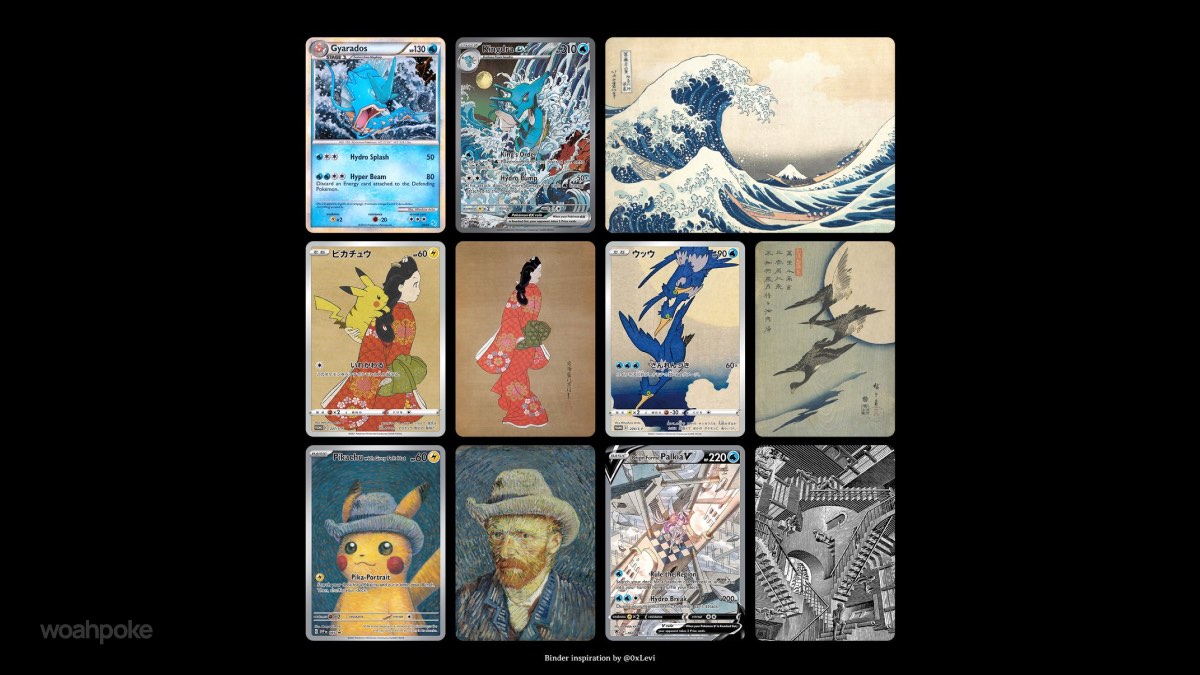 Layout by @0xLevi
Studio Ghibli Themed Layout
One of our favorite themed pages to see. This one is all about spotting the cards that share the same feeling: soft light, overgrown landscapes, quiet moments with something enormous in the background, and weaving in Ghibli frames to complement.
If you want a shortlist to build from, check out our Studio Ghibli Pokémon cards picks!
Cards Shown:
- Beautifly · Ascended Heroes #219 on eBay
- Bombirdier · Scarlet & Violet #219 on eBay
- Victini · Scarlet & Violet Promos #SVP208 on eBay
- Cottonee · White Flare #090 on eBay
- Lilligant · Black Bolt #092 on eBay
- Foongus · Black Bolt #095 on eBay
- Snorlax · Scarlet & Violet Promos #SVP051 on eBay
- Yanma · Destined Rivals #183 on eBay
- Tympole · Black Bolt #103 on eBay
- Emolga · Black Bolt #112 on eBay
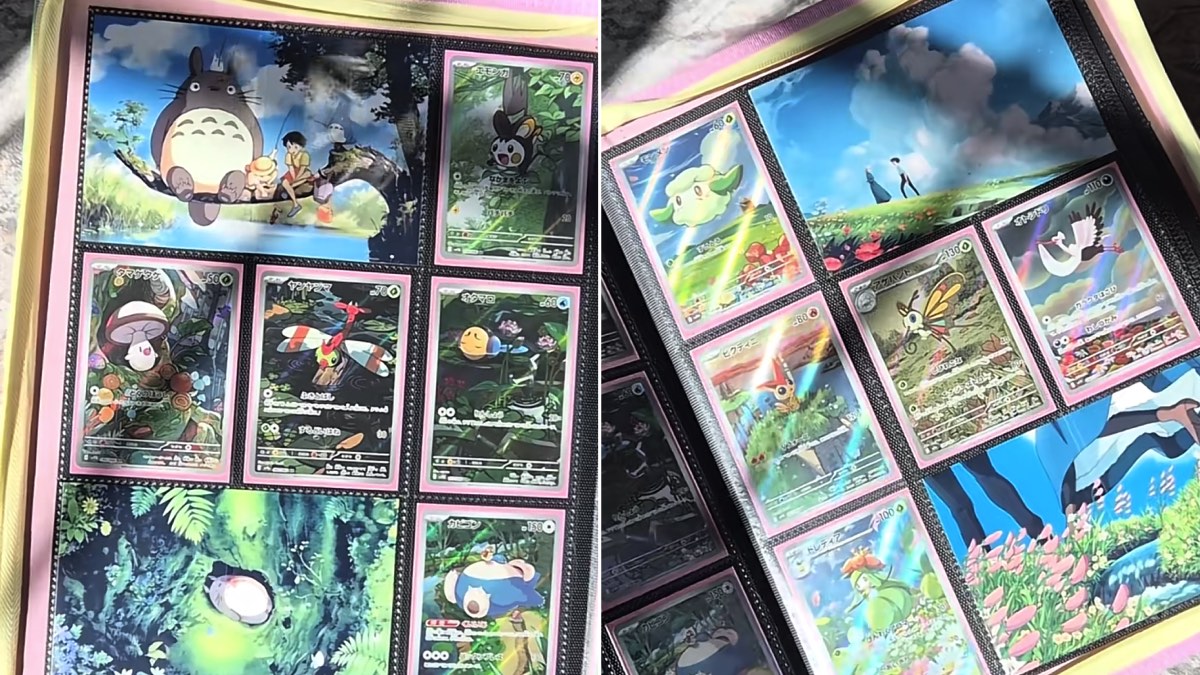 Layout by @bellamiibee
Summer & Beach Layout
Beach cards are made for this. The palette does most of the work, since almost every card in the theme shares the same blues and sandy neutrals, which means even a fairly random selection ends up looking coordinated.
Great one to build no matter what the season. We’ve got the full set of picks in our beach Pokémon cards roundup.
Cards Shown:
- Misty’s Lapras · Destined Rivals #194 on eBay
- Wiglett · Scarlet & Violet #206 on eBay
- Sunflora · Twilight Masquerade #169 on eBay
- Misty’s Psyduck · Destined Rivals #193 on eBay
- Psyduck · Ascended Heroes #226 on eBay
- Cufant · Shrouded Fable #076 on eBay
- Squirtle · Stellar Crown #148 on eBay
- Oshawott · White Flare #105 on eBay
- Dwebble · Black Bolt #129 on eBay
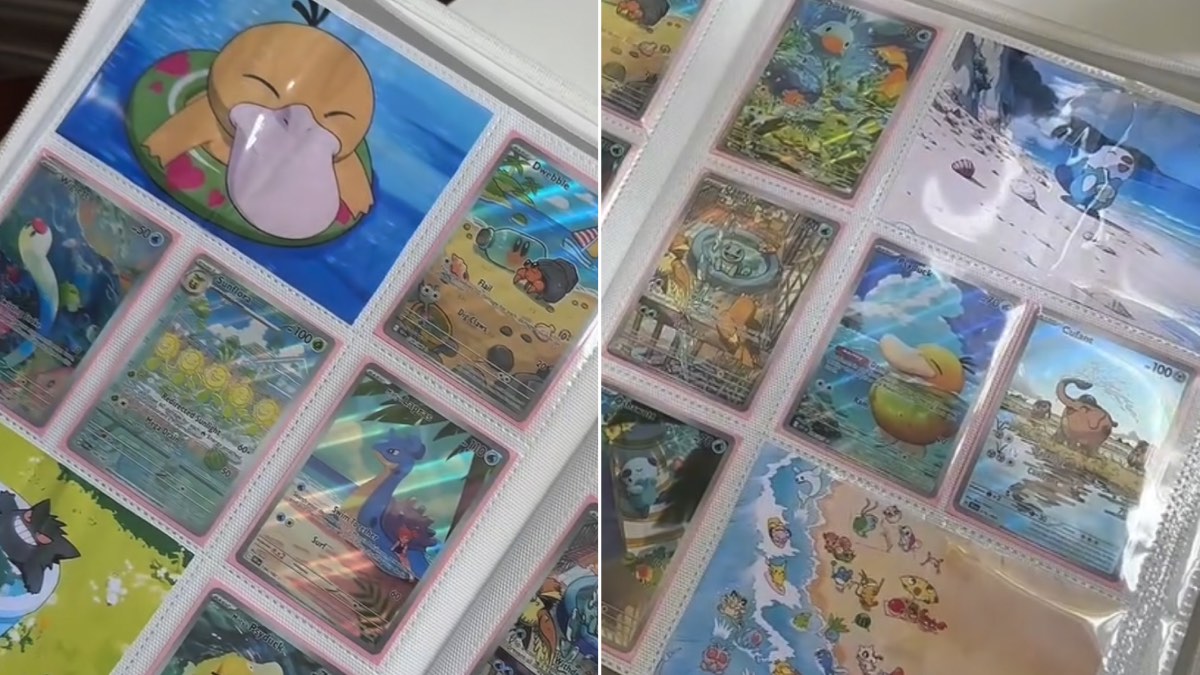 Layout by @glittersimmer6
One Piece Layout
The Michi Method isn’t a Pokémon only thing, and the One Piece TCG suits it beautifully because so much of its art is built around big dramatic scenes that beg to be spread across a page. If you collect both, a One Piece page is a nice way to break up a Pokémon binder!
We rounded up the best of it in our best One Piece TCG art post if you’re looking for somewhere to start.
Cards Shown:
- Roronoa Zoro · Premium Booster The Best Vol. 2 #PRB02-006 on eBay
- Roronoa Zoro & Sanji · Starter Deck 12: Zoro and Sanji on eBay
- Roronoa Zoro · Promo (CS 2024 Event Pack) on eBay
- Roronoa Zoro · Promo (Event Pack Vol. 3) on eBay
- Demon Aura Nine Sword Style: Asura Blades Drawn / Dead Man’s Game (Alternate Art) · Legacy of the Master on eBay
- Roronoa Zoro · Promo (OP-06 Pre-Release Tournament Winner) on eBay
- Demon Aura Nine Sword Style: Asura Blades Drawn / Dead Man’s Game · Legacy of the Master on eBay
- Roronoa Zoro · Emperors in the New World #OP09-076 on eBay
- Three Thousand Worlds (Alternate Art) · Premium Booster The Best on eBay
- Roronoa Zoro · Romance Dawn #OP01-001 on eBay
- DON!! Card (Manga Alternate Art) · Romance Dawn on eBay
- Luffy is the Man Who Will Become the King of Pirates! · Promo (3rd Anniversary Set, Japanese) on eBay
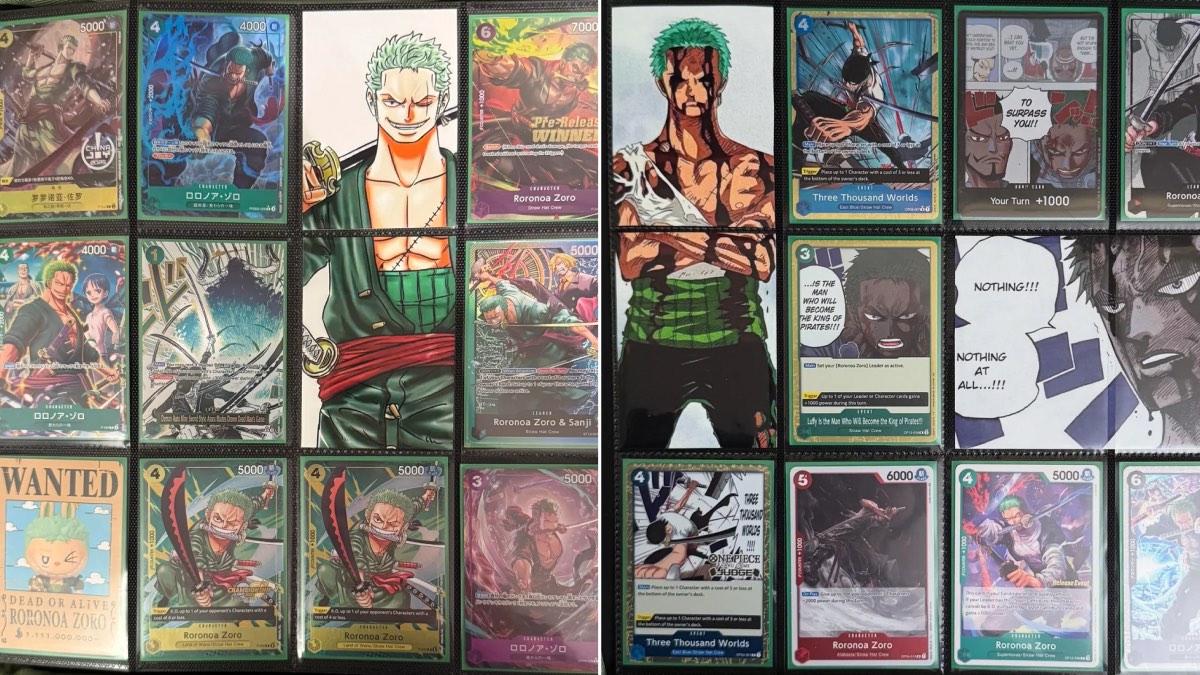 Layout by u/Maleficent-Show-1953
Best Binders for the Michi Method
Not all binders work equally well for the Michi Method. The key feature to look for is side loading pockets, binders where cards slide in from the side rather than the top.
Side loading pockets that face each other on opposite pages allow artwork to span seamlessly across the two card gap between pages, which is one of the signature looks of the Michi Method. Top loading binders can work but don’t allow the same cross-page spanning.
Pocket count is worth thinking about too. A lot of collectors go with 12-pocket binders for Michi pages over the standard 9-pocket, since the extra slots give you more real estate to play with for spanning artwork and empty space. Both options below come in either size.
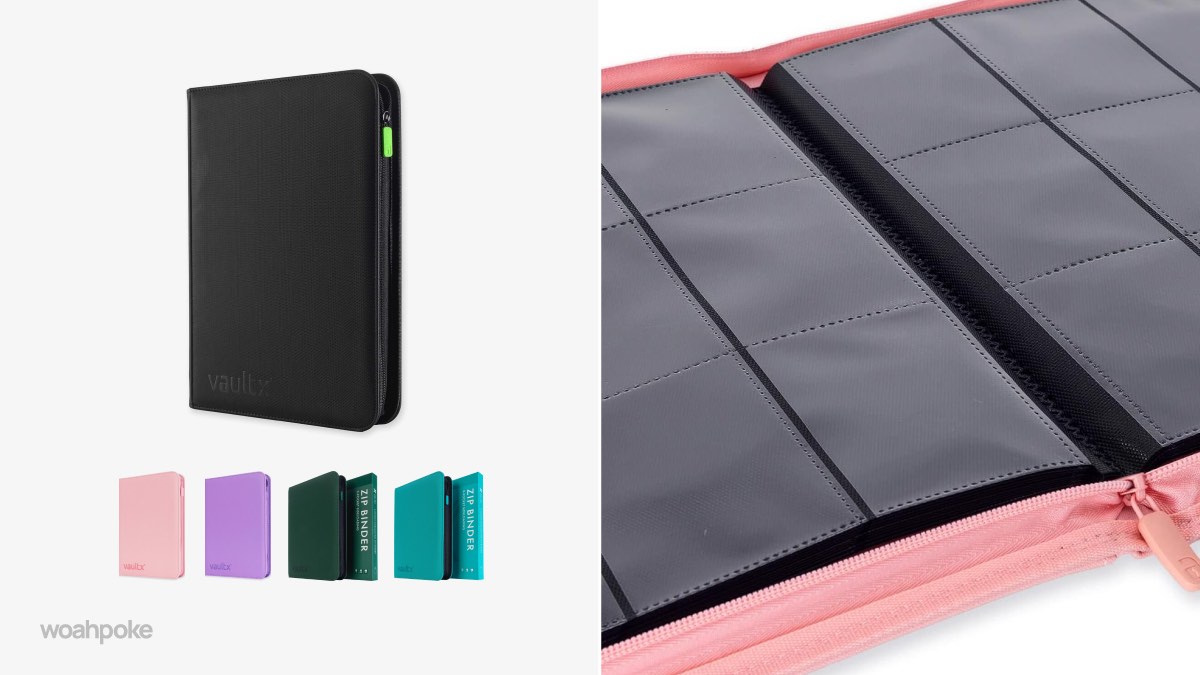
Vault X Premium Exo-Tec
The community favorite, and the one that comes up most when someone asks which binder to buy. The Exo-Tec cover is padded, water-resistant, and rigid enough to hold its shape, so it works for display and travel. Side loading pockets, a zipper running along three sides, and 360 cards across 20 double sided pages.
It comes in 9 and 12 pocket versions, and a wide range of colors!
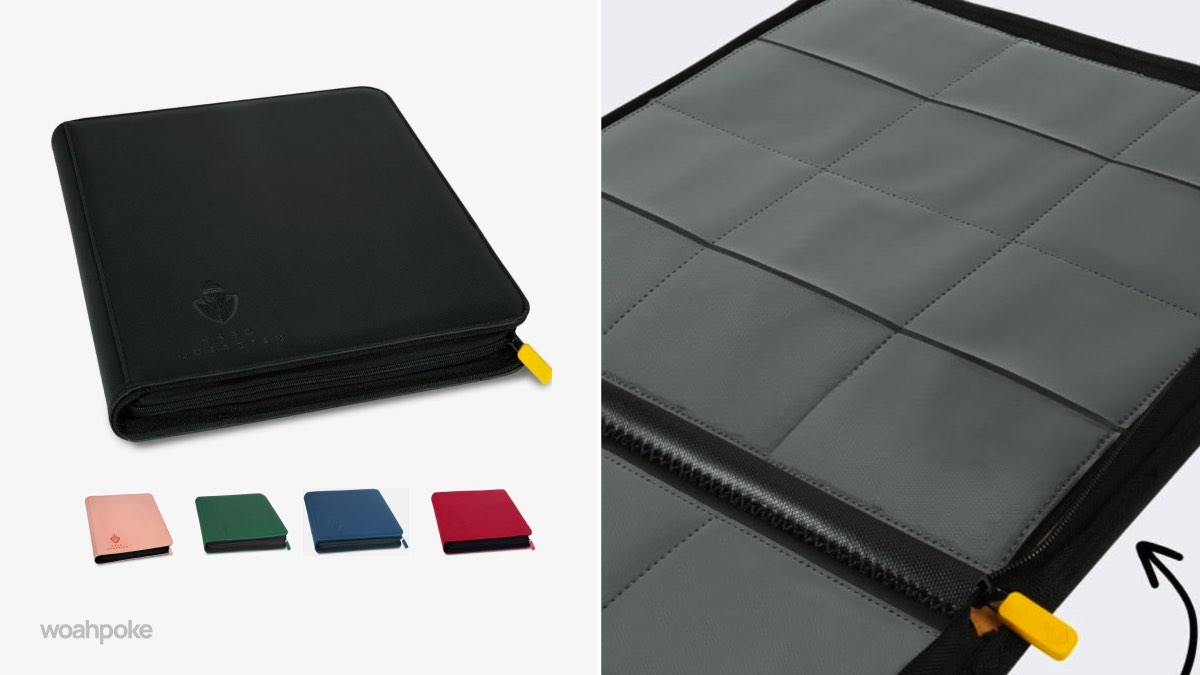
Card Guardian
A newer option that’s been gaining traction as a solid alternative to the Vault X at a similar price point. Hard front and back cover, zipper closure, and PVC-free materials. The pocket size is very slightly different from the others so worth double-checking your insert sizing if you go this route.
Michi Method Supplies: Everything You Need
Once you’ve got your binder, your cards, and your art, you don’t need much else to get started! Here’s everything you need.
The Best Paper for the Michi Method
Matte coated stock is the way to go for printing Michi Method inserts. Standard printer paper is too flimsy to stay upright in binder slots, and uncoated cardstock lets the ink spread, so your images come out looking fuzzy. Matte coated gives you the stiffness you need and keeps everything sharp.
When you’re exporting from Canva, choose PDF Print instead of the standard download option to hold onto the highest image quality.
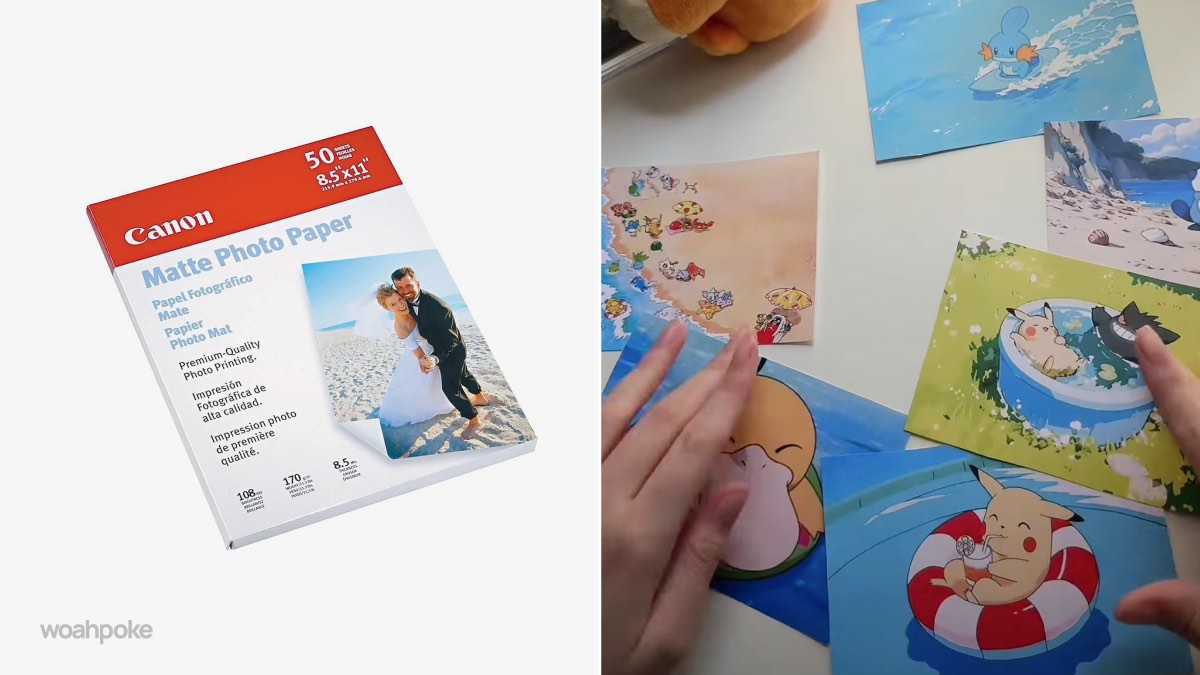 Second image via @glittersimmer6
Michi Method Cutting & Printing Tools
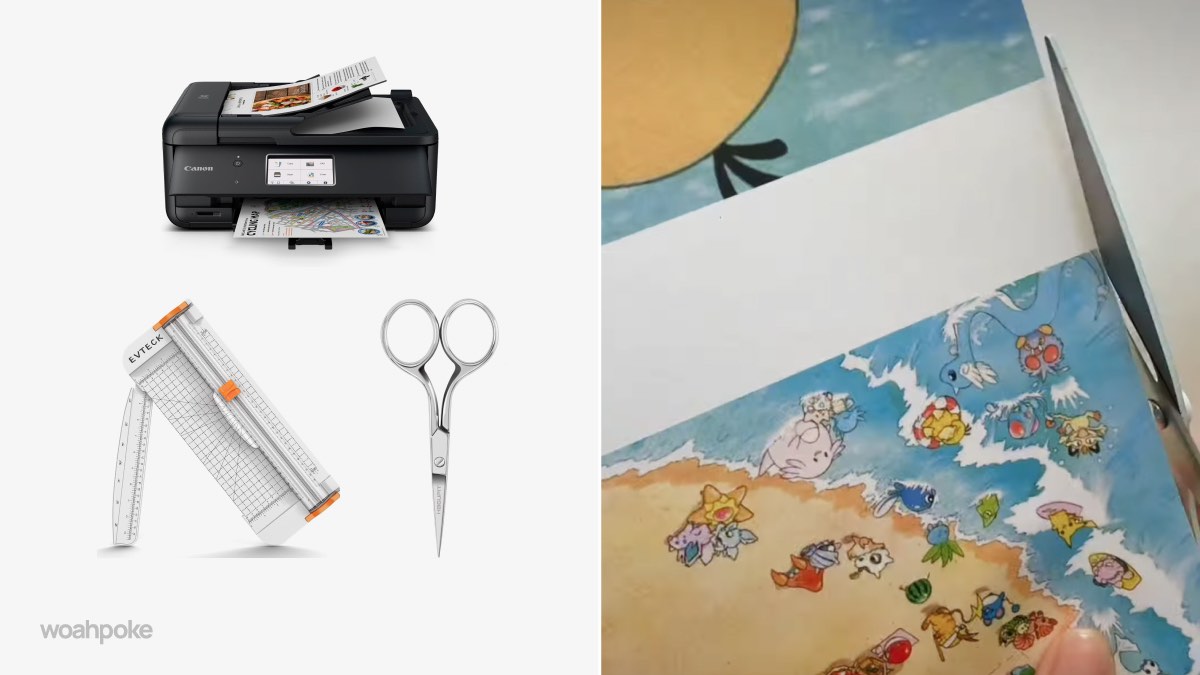
Once your inserts are printed, a straight cutter gives you the cleanest edges and gets you through a full page fast. Good embroidery scissors are good to have on hand too, and they’re better for anything a cutter can’t follow. A rounded corner cutter is worth adding if you want your inserts to match the corners of your cards.
Supplies:
- Embroidery Scissors
- Evteck Straight Paper Cutter
- Sunstar Corner Rounder Cutter
- Printer: Canon PIXMA TR8620a (Budget)
- Printer: Epson EcoTank Photo ET-8550 Wireless (High End)
- Canon Printer Color Ink
Michi Method Dimensions & Sizing
Getting the sizing right for printed inserts is one of the trickier parts of the Michi Method. Standard Pokémon cards are 63mm x 88mm (approximately 2.48″ x 3.46″). Any custom inserts or printed artwork you use should match these dimensions to sit properly in the pockets.
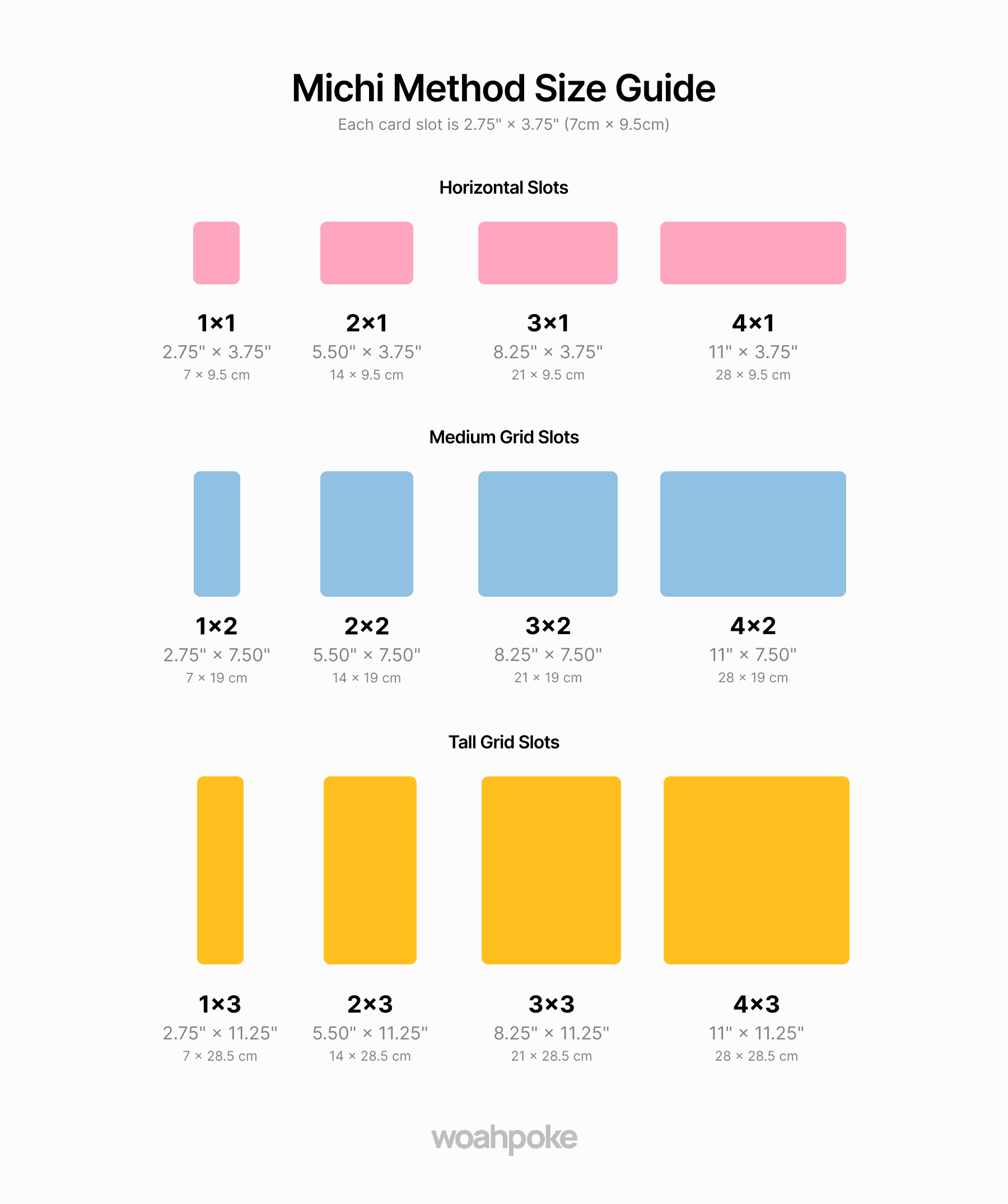
Here are some of the most popular multi-slot sizes. The exact measurements can vary slightly depending on your binder since pocket sizes aren’t universal, so it’s worth measuring yours before printing a full batch:
- 1 slot: 7cm × 9.5cm (2.75″ × 3.75″)
- 2 slots horizontal: 14cm × 9.5cm (5.50″ × 3.75″)
- 2 slots vertical: 7cm × 19cm (2.75″ × 7.50″)
- 3 slots horizontal: 21cm × 9.5cm (8.25″ × 3.75″)
- 4 slots (2×2): 14cm × 19cm (5.50″ × 7.50″)
- 9 slots (full page): 21cm × 28.5cm (8.25″ × 11.25″)
We put together a full visual reference below so you can see how each size compares at a glance:
Michi Method Templates & Tutorials
Planning your layout digitally before you start printing and cutting saves a lot of time and wasted paper. The community has put together some great resources to get you started depending on which tool you’re most comfortable with!
Canva
The easiest starting point if you’re new to digital planning. Canva is free, browser-based, and requires no design experience. The template below is ready to use straight away.
Krita
Krita is a free downloadable app with more control over your layouts if you want to get more precise with sizing and placement. It has more of a learning curve but is worth it if you plan on making a lot of inserts!
Other options
If you’d rather keep it simple, Google Slides works great, too. Set up card sized boxes in a grid and drag images in. For the lowest tech version, screenshot cards you’re considering and mock up the layout in your phone’s photo editor before committing to anything.
How to print inserts for your Michi Method binder
For the non-card slots, most collectors print inserts on cardstock to match the weight and feel of real cards. A few tips:
Print at the correct card dimensions (63mm x 88mm for single slots) and add a small bleed if your printer allows it. Matte cardstock tends to look better than glossy for inserts, and heavier cardstock (around 300gsm) will feel closest to an actual card in the pocket.
If you have a Cricut or similar cutting machine, you can print and cut inserts to exact card size automatically, which is a big time saver if you’re making a lot of them.
For artwork to use, many collectors find high resolution scans of card art, original illustrations, or fan art. Just be mindful that any inserts you make are for personal use only and not for sale.
Michi Method Art
One of the most common questions in the Michi community is where to find art for your inserts. Between official card art, fan illustrators, and concept archives, there’s no shortage of material to work with. Here are the best places to start:
Illustrator Work
Concept Art: Pokémon Settei Archive
All Pokémon: The Art of Pokémon (All Pokémon)
Characters: The Art of Pokémon Characters
The Michi Discord
The Michi Method has its own community Discord where collectors share their layouts, get feedback on pages in progress, and find inspiration for new spreads. It’s one of the best places to see the method in action across a huge range of themes and styles, and the community is genuinely welcoming to people who are just getting started.
You can join the Discord server here, or via @peeplop’s Instagram link in bio!
The Michi Method is one of those things that looks intimidating until you try it, and then it becomes hard to go back to a regular layout. Start with one page, pick a theme or a couple of cards you love, and see where it goes from there!
Are you new to the Michi Method, or were you looking for some tips? What Michi pages have you been making? Let us know in the comments below!
woahpoke is supported by its audience. When you buy something using the retail links in our posts, we may earn a small commission at no additional cost to you. Read more about our affiliate disclaimer.
Dude! This is great!
For the past few months I’ve been slowly trying to get my cards out of boxes and into actual binders, and that’s how I came across the Michi method.
I wish your article was there when I first started reading about it! It’s amazing, packed with content and extremely accessible.
Thank you for your contribution and congrats on the article! Much love from Brazil!
I’m using the Canva template linked above and is sized as instagram post (4:3). I put some images already but do I need to make or change anything to print it? Because when I press ‘print’ the images look cut at the sides.
Thanks!
[…] themed binder, our roundup of the cutest Pokémon cards is a good place to start! People love the Michi Method for theming up their binder, […]