Every Pokémon card has an illustrator credit in the bottom corner, and once you start reading them you can’t stop. Some artists have been drawing cards since 1996, others debuted last year. Some paint in watercolor, some sculpt in clay, some work entirely in flat vector shapes. This is our running list of the Pokémon card artists worth knowing, what makes each one recognizable, and where to start if you want to collect them!
We’re a small team of two and our links keep woahpoke running. As an eBay Partner Network affiliate, we earn from qualifying purchases at no additional cost to you. Learn more.
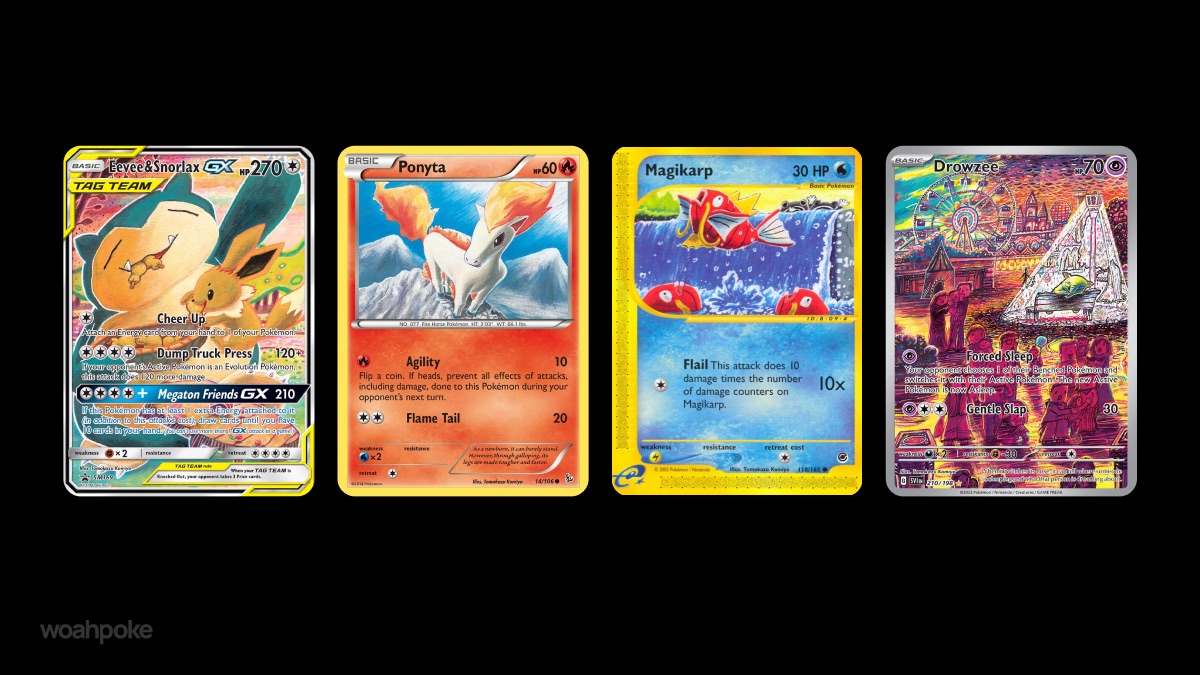
Tomokazu Komiya
If you’ve ever looked at a card and thought “that’s trippy,” there’s a good chance Komiya drew it. His work is loose, sketchy, with scratchy linework and Pokémon whose proportions get pushed way past what’s normal, stretched faces and oversized eyes that make them look a little lumpy and a lot more alive for it. He paints everything physically in gouache, watercolor, and oil, which is rare now and part of why his cards feel so different from everything around them. There’s a storybook quality to it that goes completely against the polished official art look, and that’s exactly why collectors love him. We picked the many cards below with restraint, and even then it’s a long list. He’s easily one of our favorite artists in the TCG.
Our Picks:
- Eevee & Snorlax GX · Sun & Moon Promos #SM169 on eBay
- Ponyta · Flashfire #14 on eBay
- Magikarp · Expedition #118 on eBay
- Drowzee · Scarlet & Violet #210 on eBay
- Galarian Slowking V · Chilling Reign #179 on eBay
- Frigibax · Paldea Evolved #208 on eBay
- Arctibax · Paldea Evolved #209 on eBay
- Baxcalibur · Paldea Evolved #210 on eBay
- Brute Bonnet · Paradox Rift #207 on eBay
- Karrablast · Black Bolt #094 on eBay
- Pidgeot · Expedition #23 on eBay
- Focus Band · Neo Genesis #86 on eBay
- Onix · Trading Card Game Classic Venusaur #010 on eBay
- Voltorb · Fusion Strike #087 on eBay
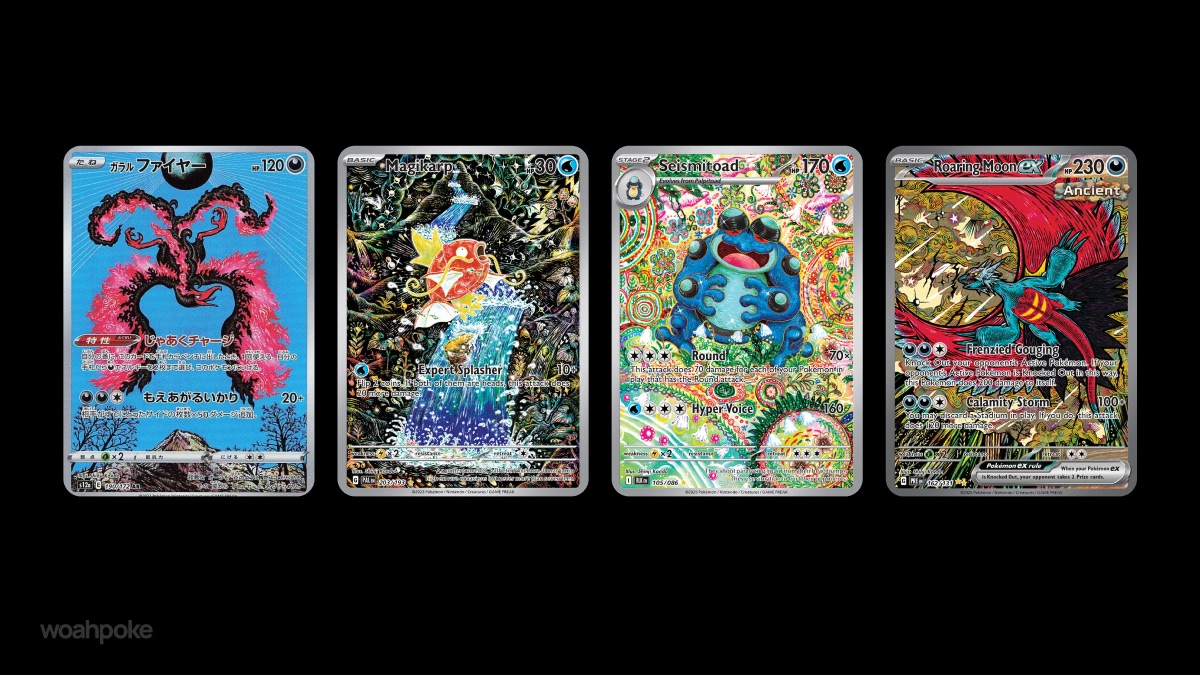
Shinji Kanja
Kanda’s cards look like nothing else in the TCG. Dense scratchy ink, heavy cross hatching, and warped perspective give his work a woodblock-print quality that feels closer to old Japanese scroll art than modern card illustration, which makes sense given he’s a fine artist who trained at the Kyoto University of the Arts. It’s chaotic in a very controlled way, and since debuting in Brilliant Stars in 2022 collectors have caught on fast. His cards tend to carry a premium purely on the strength of the art.
Our Picks:
- Galarian Moltres · Sword & Shield Promos #SWSH284 on eBay
- Magikarp · Paldea Evolved #203 on eBay
- Seismitoad · Black Bolt #105 on eBay
- Roaring Moon ex · Prismatic Evolutions #162 on eBay
- Magneton · Scarlet & Violet Promos #159 on eBay
- Oricorio ex · Mega Evolution Promos #024 on eBay
- Giratina V · Lost Origin #186 on eBay
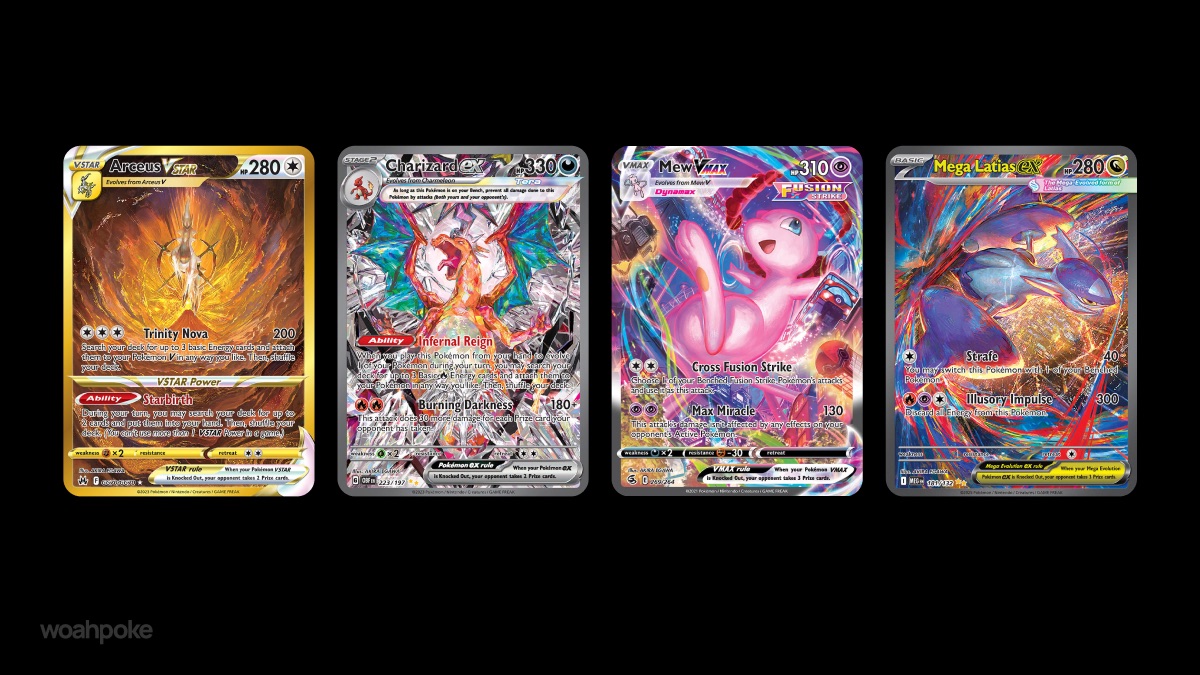
Akira Egawa
Egawa is the artist to know if you like your cards cinematic. She works digitally in Photoshop with a background in 3D modelling, and it shows in the depth and lighting. Everything has real weight and scale, with dramatic contrast and texture work on fur and scales that most illustrators don’t attempt. She debuted in Unified Minds in 2019 and has since become a reliable source of chase cards, most famously the four gold alternate art VSTARs in Crown Zenith’s Galarian Gallery. She also illustrates for the One Piece TCG, where her work is just as striking.
Our Picks:
- Arceus VSTAR · Crown Zenith #GG70 on eBay
- Giratina VSTAR · Crown Zenith #GG69 on eBay
- Origin Forme Dialga VSTAR · Crown Zenith #GG68 on eBay
- Origin Forme Palkia VSTAR · Crown Zenith #GG67 on eBay
- Charizard ex · Obsidian Flames #223 on eBay
- Mega Darkrai ex · Pitch Black #116 on eBay
- Mega Hawlucha ex · Ascended Heroes #283 on eBay
- Mew VMAX · Fusion Strike #269 on eBay
- Kingdra · Lost Origin #037 on eBay
- Mega Latias ex · Mega Evolution #181 on eBay
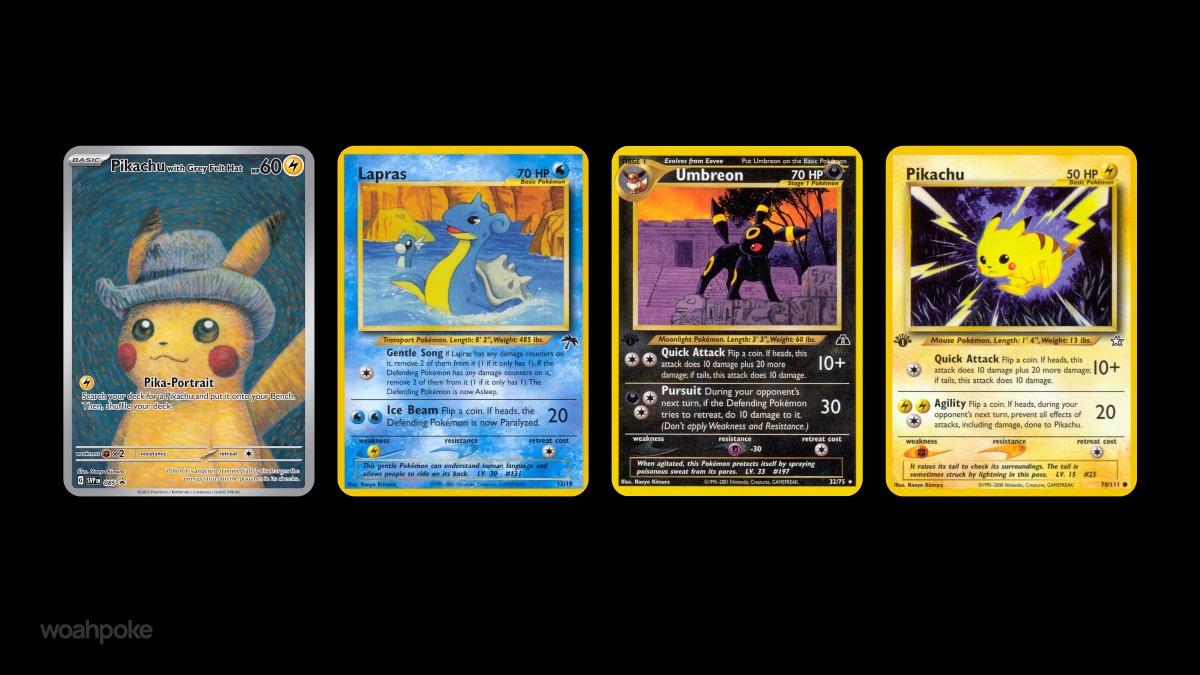
Naoyo Kimura
One of the true veterans, illustrating for the TCG since the very beginning! Kimura’s cards are soft and hand-drawn, some in watercolor and some with a grainy colored-pencil texture, always with warm light and natural settings instead of hard outlines. That look defined a whole era of how Pokémon appeared on cardboard. She’s behind the 1999 Southern Islands set, one of the most beloved collections ever printed thanks to its dreamy tropical backdrops that connect into a single image, and a good chunk of the vintage Eeveelution cards collectors still chase. More recently she illustrated Pikachu with Grey Felt Hat for the Van Gogh Museum collaboration, which became one of the most talked about promos in years.
Our Picks:
- Pikachu with Grey Felt Hat · Scarlet & Violet Promos #085 on eBay
- Lapras · Southern Islands #12 on eBay
- Umbreon · Neo Discovery #32 on eBay
- Pikachu · Neo Genesis #70 on eBay
- Lugia · Aquapolis #149 on eBay
- Wartortle · Southern Islands #15 on eBay
- Bulbasaur · Supreme Victors #93 on eBay
- Light Jolteon · Neo Destiny #48 on eBay
- Aerodactyl · Dark Explorers #53 on eBay
- Chikorita · Neo Genesis #53 on eBay
- Light Wigglytuff · Neo Destiny #54 on eBay
- Sylveon · Cosmic Eclipse #155 on eBay
- All Southern Islands cards on eBay
sowsow
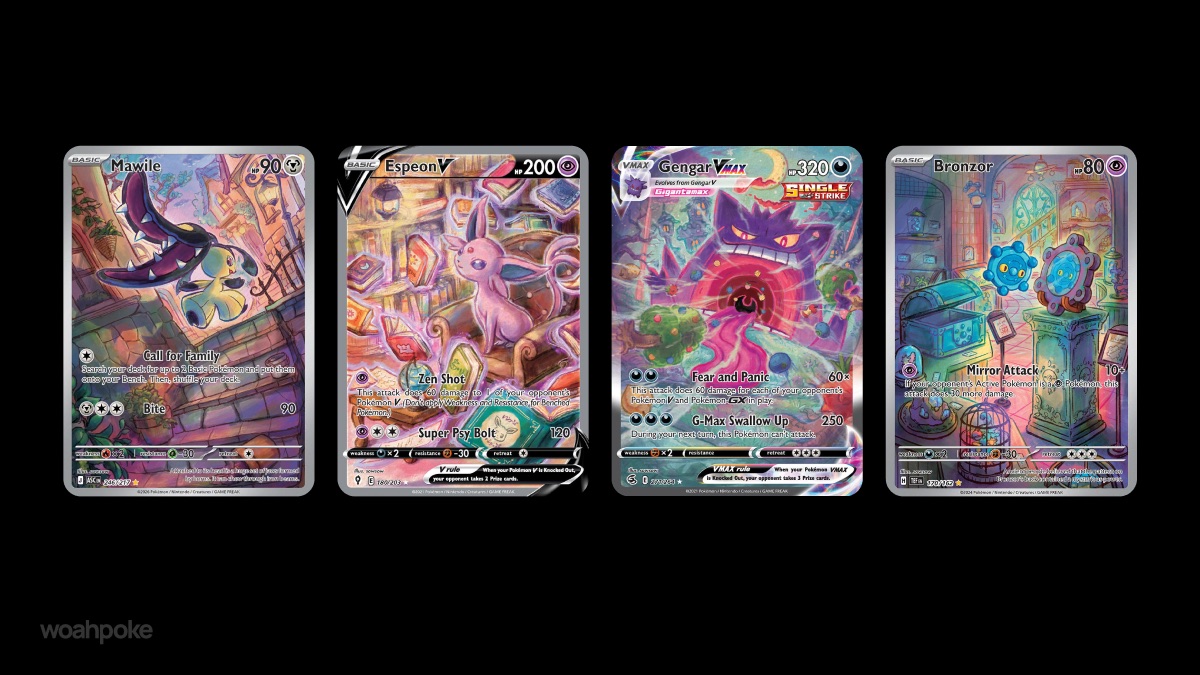
sowsow paints places, not portraits. Their cards drop Pokémon into warm, densely detailed environments like bakeries, antique shops, overgrown gardens, and let you wander around in them. The rendering is soft and painterly with a watercolor warmth, and there’s always more going on in the background than you catch on the first look.
Mostly slice of life rather than battle scenes, though they’ll go chaotic when the Pokémon calls for it, like the swirling vortex on the Gengar VMAX. They’ve been at it since Forbidden Light in 2018 and are one of the most quietly rewarding artists to collect.
Our Picks:
- Mawile · Ascended Heroes #246 on eBay
- Espeon V · Evolving Skies #180 on eBay
- Gengar VMAX · Fusion Strike #271 on eBay
- Bronzor · Temporal Forces #170 on eBay
- Bramblin · Paldea Evolved #198 on eBay
- Noibat · Journey Together #169 on eBay
- Simisear · White Flare #100 on eBay
- Alcremie · Brilliant Stars #071 on eBay
- Pikachu · Sword & Shield Promos #SWSH153 on eBay
- Galarian Slowpoke · Sword & Shield Promos #SWSH126 on eBay
Oswaldo KATO
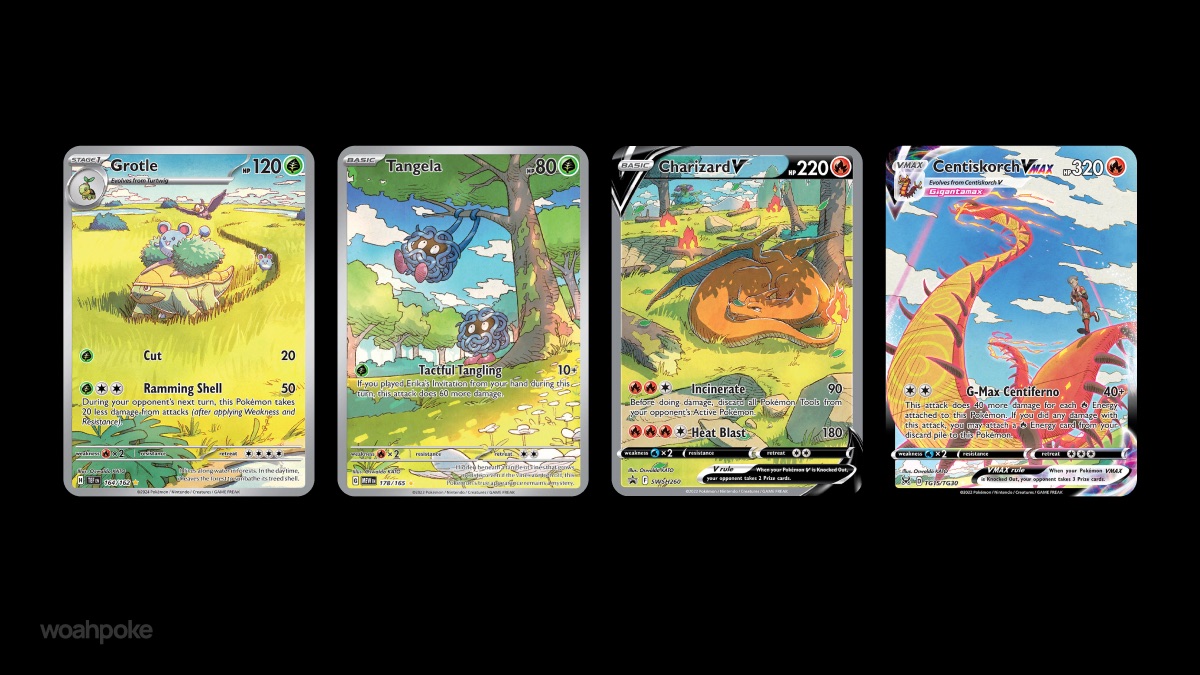
Kato’s cards look like storybook pages. Chunky confident outlines, flat blocks of color, and simplified shapes that feel closer to picture-book illustration than typical TCG art, with every card framed as a wide view of a place rather than a portrait of a Pokémon. He’s Brazilian-born and Tokyo-based, debuting on a Venipede in Chilling Reign, and he’s spoken publicly about building narrative into images (and even wrote a book on it). That approach shows: his cards always feel like a moment from a bigger story. He also illustrated the Chinese-exclusive 151 Pikachus.
Our Picks:
- Grotle · Temporal Forces #164 on eBay
- Tangela · 151 #178 on eBay
- Charizard V · Sword & Shield Promos #SWSH260 on eBay
- Centiskorch VMAX · Lost Origin #TG15 on eBay
- Origin Forme Palkia V · Astral Radiance #167 on eBay
- Trubbish · White Flare #140 on eBay
- Shadow Rider Calyrex V · Astral Radiance #TG17 on eBay
- Golurk V · Evolving Skies #182 on eBay
- Ice Rider Calyrex VMAX · Chilling Reign #203 on eBay
- All Chinese 151 Pikachu Cards on eBay
Gapao
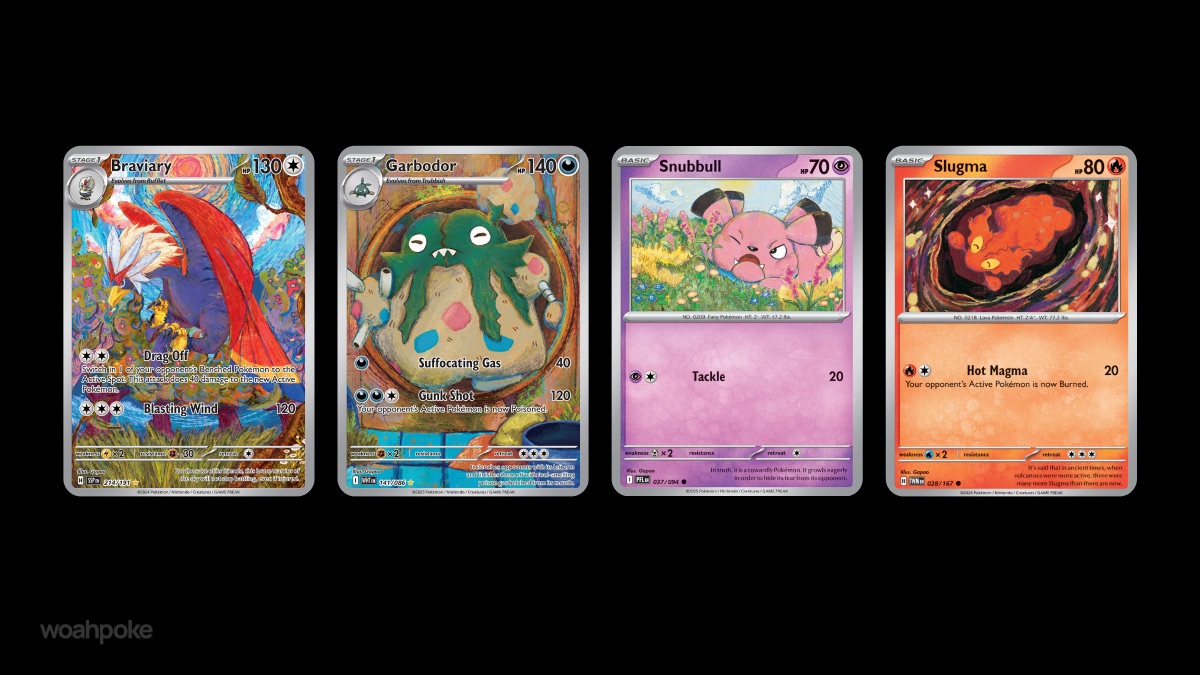
Gapao is one of the smaller libraries on this list, but the style is impossible to miss. Thick visible brushstrokes, swirling texture in the skies, and colors laid down in dabs rather than blended smooth, closer to an impressionist painting than to card art. The Braviary from Surging Sparks is our favorite, a wildly underrated illustration rare with a sky that looks like it’s moving. Gapao debuted on a Roserade in Temporal Forces in 2024.
Our Picks:
- Braviary · Surging Sparks #214 on eBay
- Garbodor · White Flare #141 on eBay
- Snubbull · Phantasmal Flames #037 on eBay
- Slugma · Twilight Masquerade #028 on eBay
- Team Rocket’s Exeggcute · Ascended Heroes #077 on eBay
- Jynx · Twilight Masquerade #046 on eBay
- Krookodile · Black Bolt #059 on eBay
Kagemaru Himeno
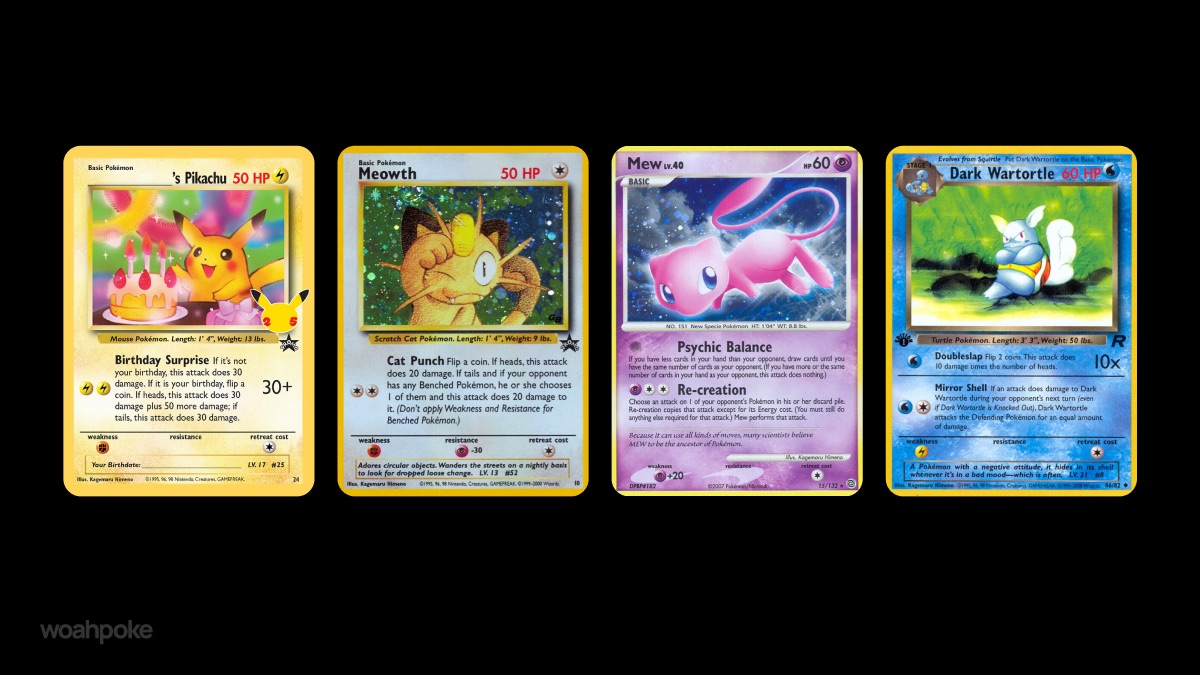
Himeno came to the TCG from shoujo manga and it shows. She’s been drawing cards since the Japanese Jungle set in 1997 with over 650 to her name, including the beloved Birthday Pikachu, which means if you collect vintage at all, you already own her work whether you knew it or not. Her style has evolved a ton throughout the years, with newer illustrations looking much more polished and cinematic than her soft vintage work.
Our Picks:
- Birthday Pikachu · Celebrations #24 on eBay
- Meowth · Wizards Black Star Promos #10 on eBay
- Mew · Secret Wonders #15 on eBay
- Dark Wartortle · Team Rocket #46 on eBay
- Pikachu · McDonald’s Collection 2019 #6 on eBay
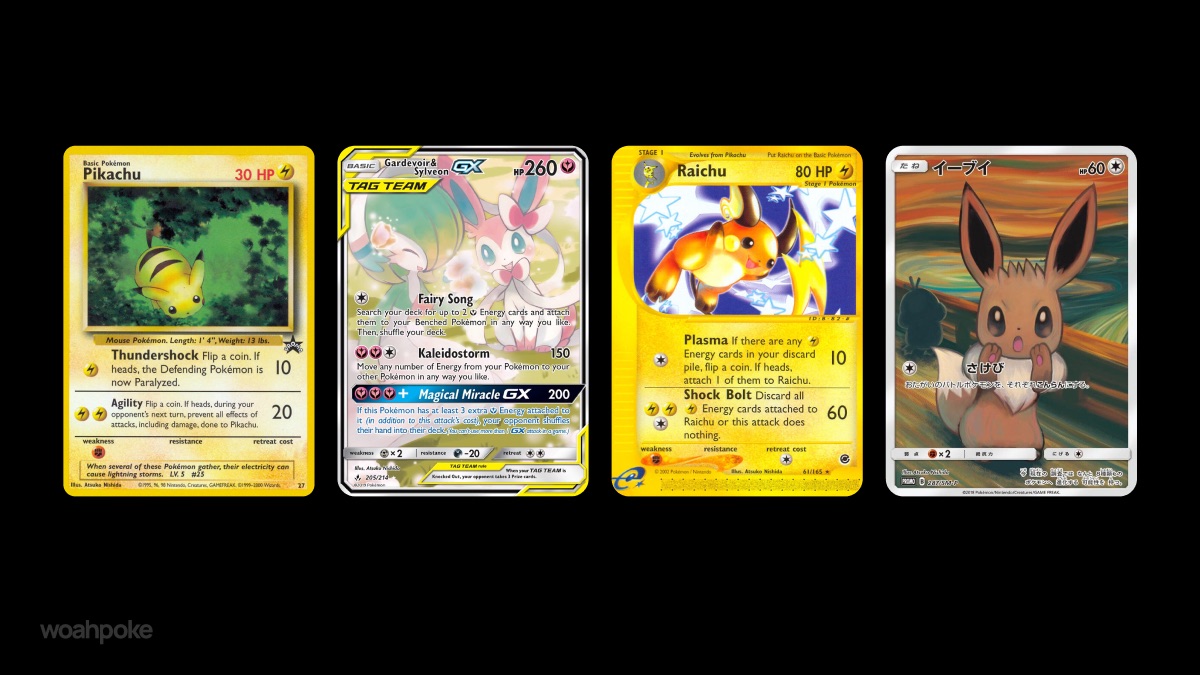
Atsuko Nishida
Nishida is one of the most consequential people in Pokémon, full stop, and most of it happened before she ever illustrated a card. She was on the graphics team at Game Freak alongside Sugimori and Satoshi Tajiri, and during development of the first games she designed a huge share of the creatures, generally the cuter ones. That includes Pikachu, which she has said started out looking like a vertically long daifuku with ears, with the electric cheeks modelled on squirrels storing food. She also deemsigned the original starter Pokémon, Charizard, almost all of the Eeveelutions except Jolteon and Flareon, and many more faves.
As an illustrator she’s been drawing cards since the earliest Japanese promos, with roughly 450 to her name. Her style is soft and airbrushed, warm palettes and gentle light used to pick out one part of the image without ever getting harsh, and it always feels like the Pokémon belongs in the scene rather than posed on top of it. Her Eevee from the Munch collaboration is one of the most beloved Pokémon cards inspired by real art.
And if her resumé wasn’t impressive enough, she also drew the Pikachu Illustrator, the 1998 contest promo that only 39 copies were ever handed out for. It’s the rarest Pokémon card and the most expensive trading card ever sold.
Our Picks:
- Pikachu · Wizards Black Star Promos #27 on eBay
- Gardevoir & Sylveon GX · Unbroken Bonds #205 on eBay
- Raichu · Expedition #61 on eBay
- Eevee · Sun & Moon Promos #287/SM-P on eBay
- Pikachu · Legendary Treasures #RC7 on eBay
- Wartortle · Expedition #92 on eBay
- Ampharos · Expedition #34 on eBay
- Blaine’s Growlithe · Gym Heroes #62 on eBay
- Giovanni’s Meowth · Gym Challenge #43 on eBay
- Squirtle · Team Rocket #68 on eBay
- Growlithe · Supreme Victors #108 on eBay
- Misty’s Goldeen · Gym Heroes #85 on eBay
- Lt. Surge’s Rattata · Gym Challenge #85 on eBay
Narumi Sato
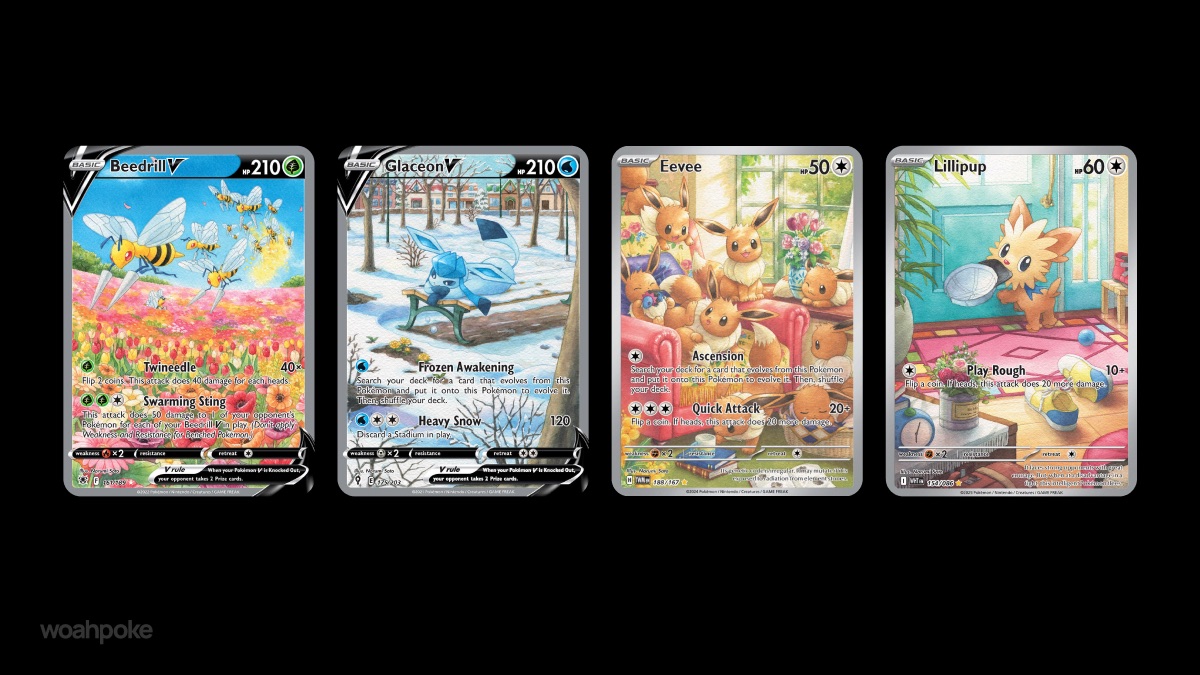
Sato paints in soft traditional watercolour, and her cards are some of the calmest, coziest illustrations in the modern TCG. Instead of action she goes for quiet everyday moments. She placed second in the first Pokémon Card Game Illustration Grand Prix and became an official illustrator in 2020, and her work has a lived-in tenderness that makes it easy to fall for.
Our Picks:
- Beedrill V · Astral Radiance #161 on eBay
- Glaceon V · Evolving Skies #175 on eBay
- Eevee · Twilight Masquerade #188 on eBay
- Lillipup · White Flare #154 on eBay
- Sandaconda V · Fusion Strike #252 on eBay
- Sudowoodo · Paldea Evolved #219 on eBay
- Snorunt · Paradox Rift #188 on eBay
- Lechonk · Obsidian Flames #209 on eBay
danciao
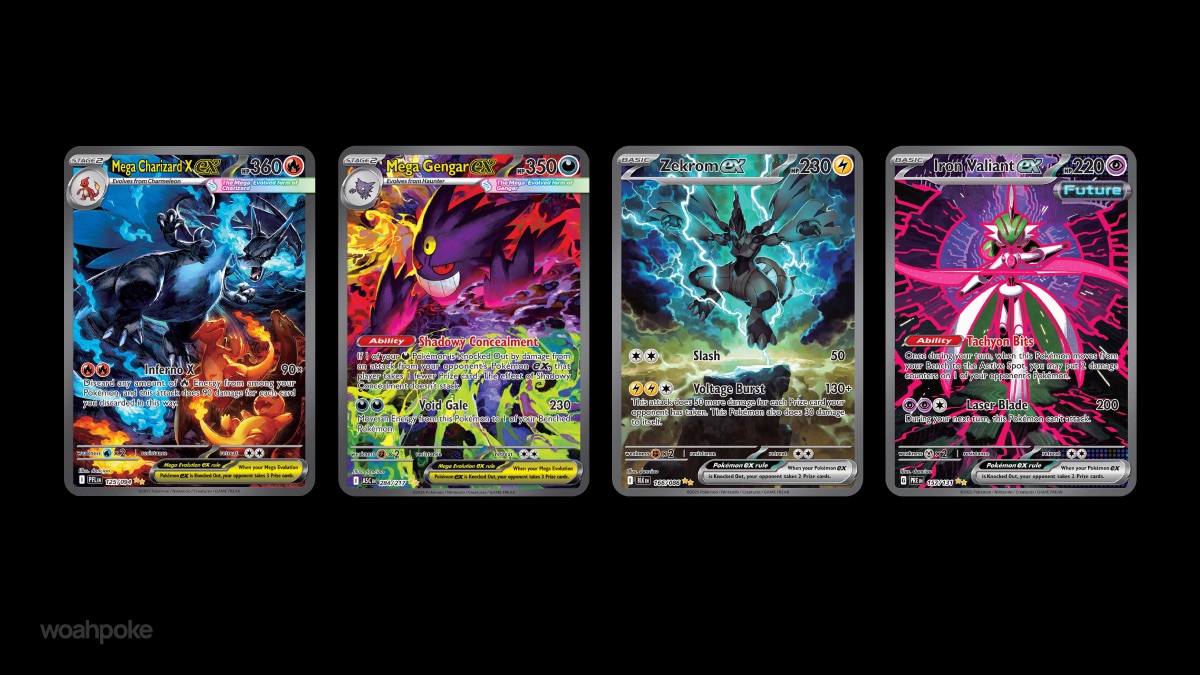
danciao makes some of the most dramatic, high voltage cards in the modern TCG. Their style is all bold neon color against dark backgrounds, with electric arcs, glowing flame, and shadowy energy pushed to the absolute max, so every card feels like a splash panel climax. It’s flashy in the best way and reads incredibly well as a full art. If a card looks like it’s about to leap off the page in a burst of color, there’s a good chance it’s theirs.
Our Picks:
- Iron Valiant ex · Prismatic Evolutions #157 on eBay
- Mega Charizard X ex · Phantasmal Flames #125 on eBay
- Mega Gengar ex · Ascended Heroes #284 on eBay
- Zekrom ex · Black Bolt #166 on eBay
- Rapidash · Stellar Crown #020 on eBay
sui
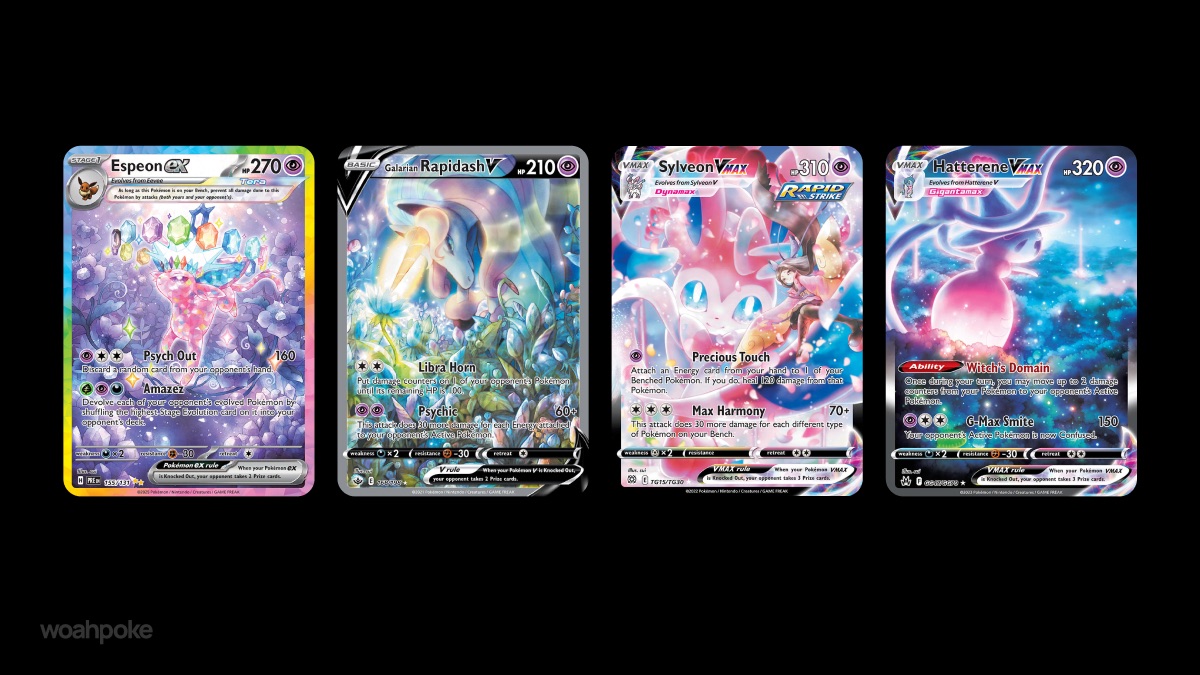
sui’s cards have a dreamy, glowy quality that’s instantly recognizable. Everything looks lit from within with hazy edges and a shimmer that makes the whole card feel like it’s caught mid-sparkle. The palettes lean into pastels and jewel tones, and there’s a romantic, almost storybook softness to how the Pokémon sit in their scenes. If a card stops you because it seems to be quietly glowing, there’s a good chance sui drew it.
Our Picks:
- Espeon ex · Prismatic Evolutions #155 on eBay
- Galarian Rapidash V · Chilling Reign #168 on eBay
- Sylveon VMAX · Brilliant Stars #TG15 on eBay
- Hatterene VMAX · Crown Zenith #GG47 on eBay
- Acerola’s Mischief · Mega Evolution #183 on eBay
- Alcremie · Sword & Shield Promos #SWSH058 on eBay
- Cinccino · Sword & Shield #147 on eBay
- Sylveon ex · Generations #RC21 on eBay
- Jirachi · XY Promos #XY67 on eBay
- Mewtwo & Mew GX · Sun & Moon Promos #SM191 on eBay
Ken Sugimori
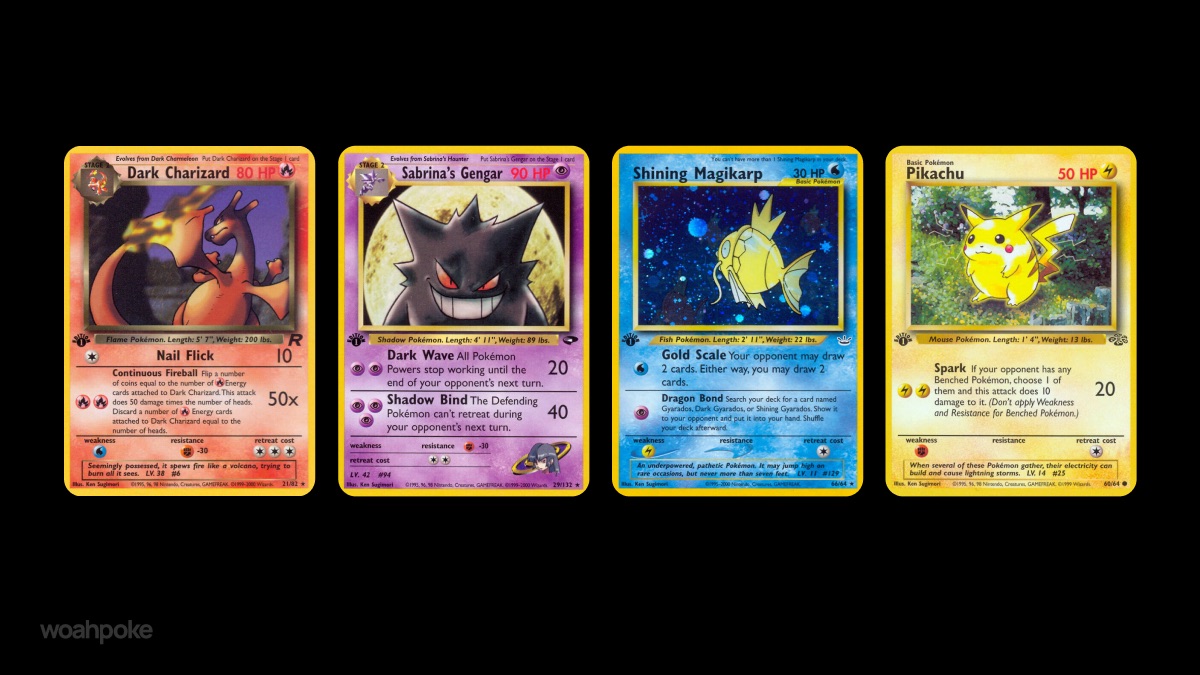
The most foundational name in Pokémon cards, full stop. Sugimori has been with Game Freak since the beginning and drew the official artwork for the original 151, giving the entire franchise its visual identity in one consistent hand. He’s since illustrated over 1,000 cards, more than almost anyone in the hobby. Worth knowing that he didn’t design all of the originals alone, despite how often that gets repeated. The creatures came from a team, but Sugimori drew the final art so everything would look like it belonged together. He’s a different kind of pick than the rest of this list: you don’t collect Sugimori for a distinctive flourish, you collect him because his is the definitive version of every Pokémon.
Our Picks:
- Dark Charizard · Team Rocket #21 on eBay
- Sabrina’s Gengar · Gym Challenge #29 on eBay
- Shining Magikarp · Neo Revelation #66 on eBay
- Pikachu · Jungle #60 on eBay
- Blastoise · Base Set #2 on eBay
- Mr. Fuji · Fossil #58 on eBay
- Imposter Oak’s Revenge · Team Rocket #76 on eBay
Mitsuhrio Arita
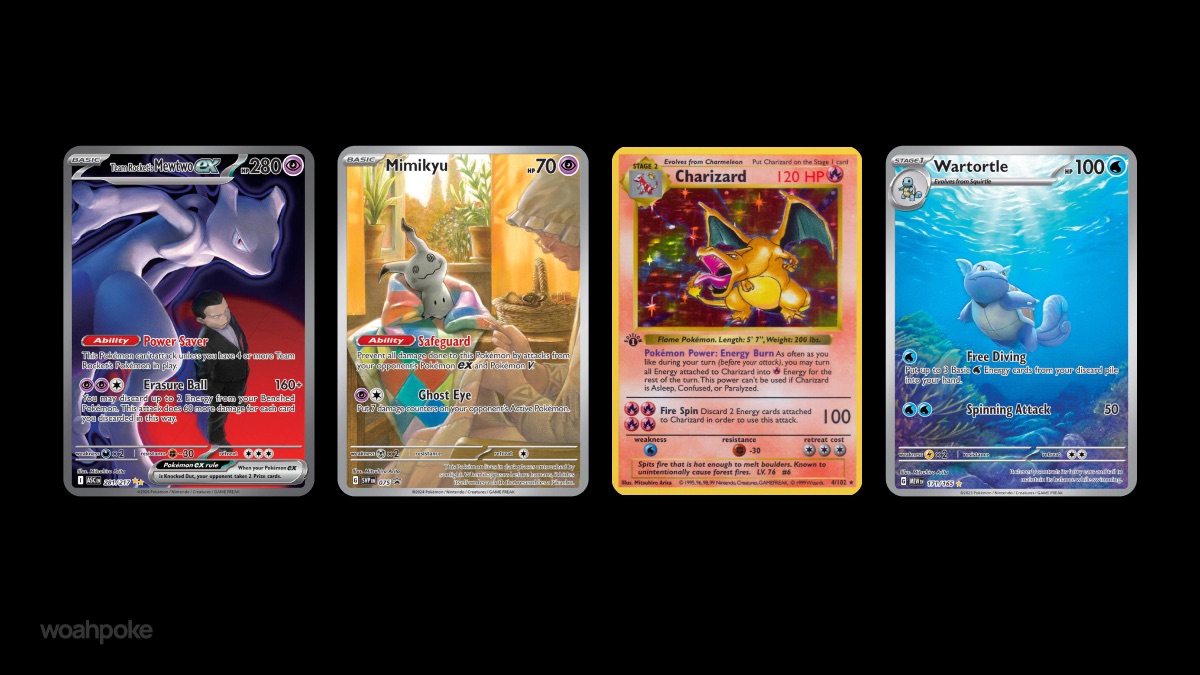
If Sugimori gave Pokémon its look, Arita gave the cards theirs. He drew the Base Set Charizard, which is about as close to hobby royalty as it gets, and he designed the original energy symbols on top of it. He’s been at it since the TCG launched in 1996 with over 600 cards to his name, and his style has evolved a lot along the way, from soft watercolor and pastel textures in the early days to the dramatic cinematic lighting and bold angles you see in his modern work. He’s still producing some of the most sought-after art in the hobby, with Team Rocket’s Mewtwo from Ascended Heroes, Mewtwo GX, the beloved Mimikyu promo, and the Squirtle line illustration rares from 151 all bearing his name.
Our Picks:
- Team Rocket’s Mewtwo ex · Ascended Heroes #281 on eBay
- Mimikyu · Scarlet & Violet Promos #075 on eBay
- Charizard · Base Set #4 on eBay
- Squirtle · 151 #170 on eBay
- Wartortle · 151 #171 on eBay
- Blastoise ex · 151 #200 on eBay
- Mewtwo GX · Shining Legends #78 on eBay
Mugi Hamada
Hamada is relatively new to the TCG with a smaller portfolio than most artists on this list, debuting in Twilight Masquerade, but the work stands out immediately. Everything looks unmistakably painted with thick directional brushstrokes left visible rather than blended away, so you can read the texture of the paint in every quilt fold and curtain. Our favorite is the Purrloin full art from White Flare that’s as much a still life as a Pokémon card.
Our Picks:
- Purrloin · White Flare #136 on eBay
- Cubone · Journey Together #076 on eBay
- Aipom · Twilight Masquerade #137 on eBay
- Kakuna · Chaos Rising #002 on eBay

Yuka Morii
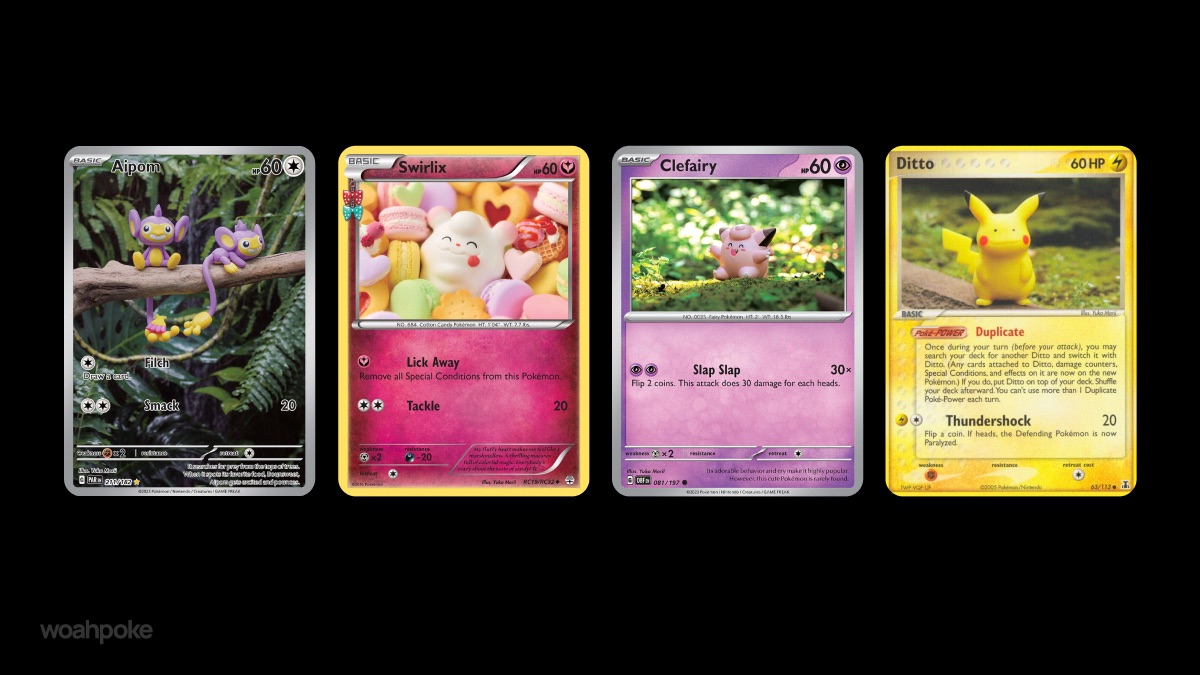
Morii doesn’t draw her Pokémon, she sculpts them. Every card starts as a physical clay figure that gets photographed, so the depth, shadow, and rounded form are all real. Hers is the polished end of model work, smooth and clean and instantly recognizable, with a handmade warmth no illustration can replicate. Completely unmistakable once you know to look for it.
Our Picks:
- Aipom · Paradox Rift #211 on eBay
- Swirlix · Generations #RC19 on eBay
- Clefairy · Obsidian Flames #081 on eBay
- Ditto · Delta Species #63 on eBay
- Venusaur & Snivy GX · Sun & Moon Promos #SM229 on eBay
- Chansey · Neo Destiny #31 on eBay
USGMEN
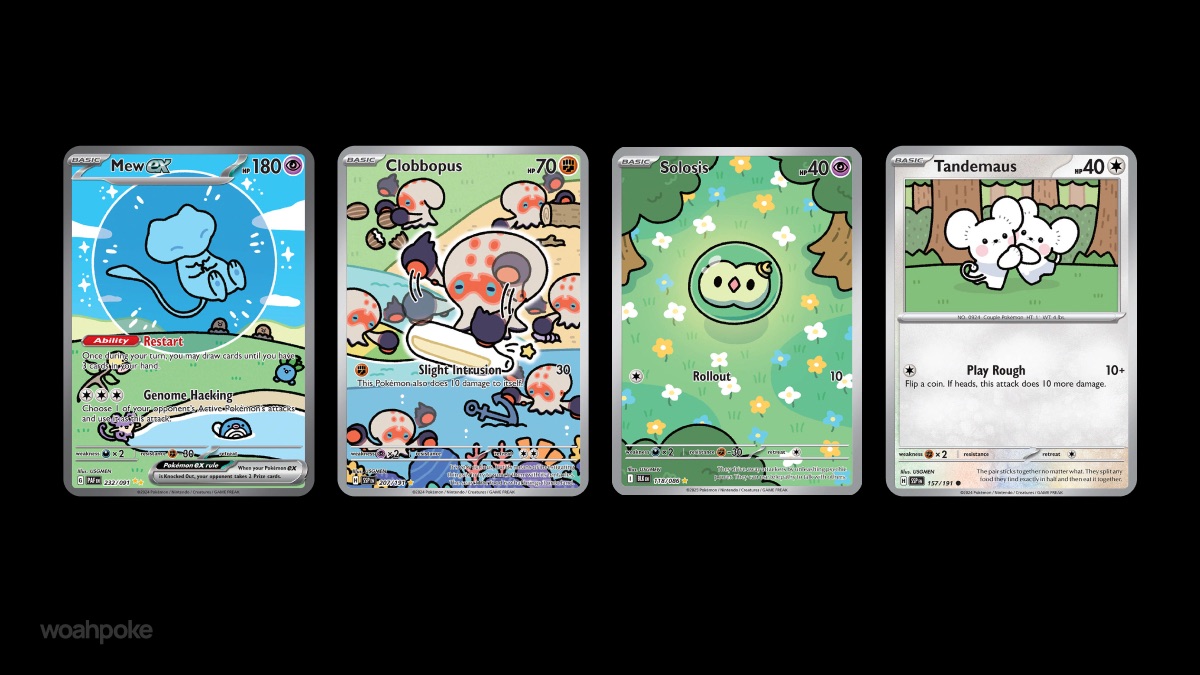
USGMEN is one of the newer names in the TCG, with only a handful of cards to his name since 2024, but already one of the most recognizable. USGMEN’s first card was Mew ex from Paldean Fates (Bubble Mew) and he couldn’t have debuted with a more iconic card.
His style is completely unlike anything else in the set: flat graphic shapes, heavy uniform outlines, and basically no shading, with faces pared back to two dots and a smile. They read more like sticker design or a children’s picture book than traditional card illustration, and the bright poster flat color makes them jump off a binder page.
Our Picks:
- Mew ex · Paldean Fates #232 on eBay
- Clobbopus · Surging Sparks #207 on eBay
- Solosis · Black Bolt #118 on eBay
- Tandemaus · Surging Sparks #157 on eBay
Sachi Matoba
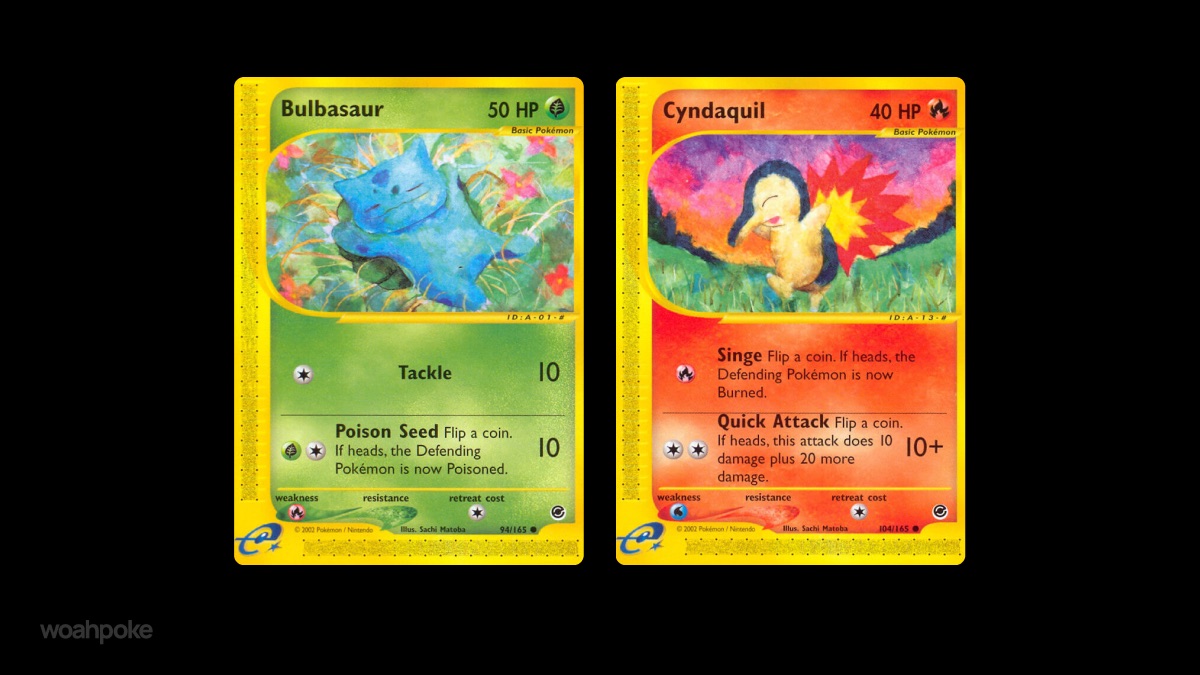
The shortest library on this list with just two cards in the TCG, both from Expedition Base Set in 2002. Matoba was a graphic designer at Creatures Inc. working on spin-off games like Pokémon Ranger and Battle Revolution, and these two cards are essentially a side quest. But they’re too good to leave out! Matoba works in loose wet on wet watercolor where the colors bleed into each other and the edges go soft, so the Pokémon feel like they’re dissolving into the grass around them. The Bulbasaur is one of our favorite Bulba cards in the TCG.
Our Picks:
Mékayu
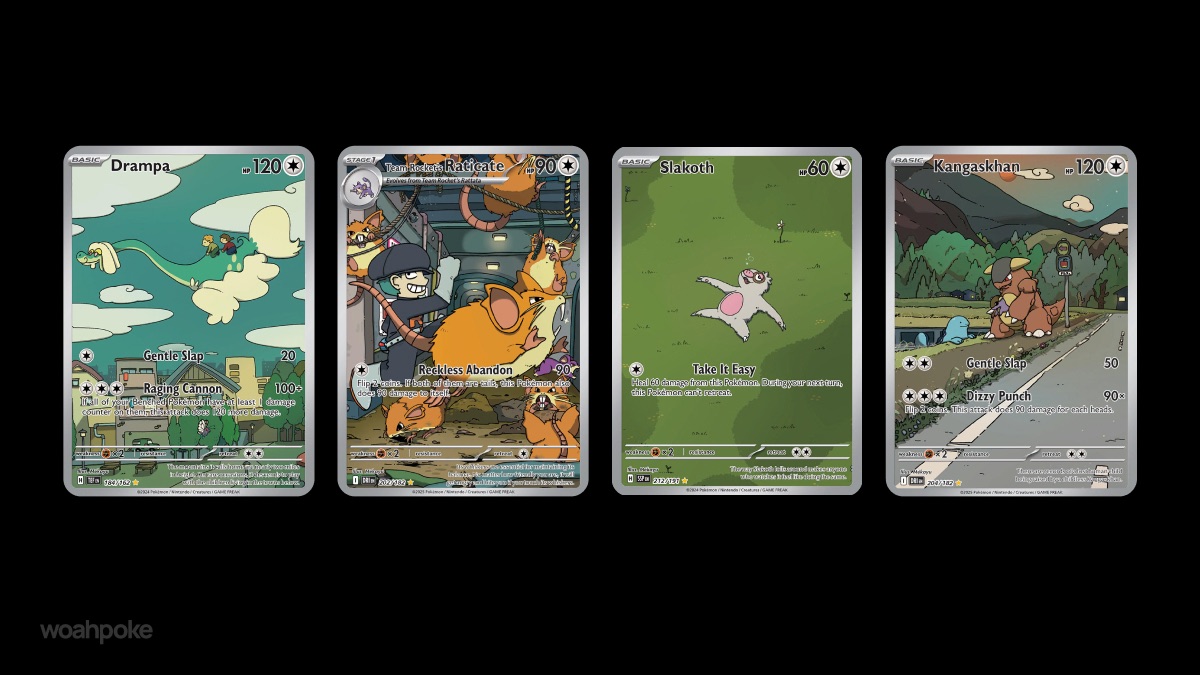
Mékayu’s cards feel like comic panels. Clean even linework, flat cel-style color, and Pokémon caught mid-moment rather than posed for a portrait. There’s a lightness and storytelling wit here you don’t see much on cards, and it makes every one of them worth a second look. The Drampa illustration rare is one of our favorites in our collection, a super underrated full art!
Our Picks:
- Drampa · Temporal Forces #184 on eBay
- Team Rocket’s Raticate · Destined Rivals #202 on eBay
- Slakoth · Surging Sparks #212 on eBay
- Kangaskhan · Destined Rivals #204 on eBay
- Slowbro · Pitch Black #090 on eBay
- Shelmet · White Flare #093 on eBay
Miki Tanaka
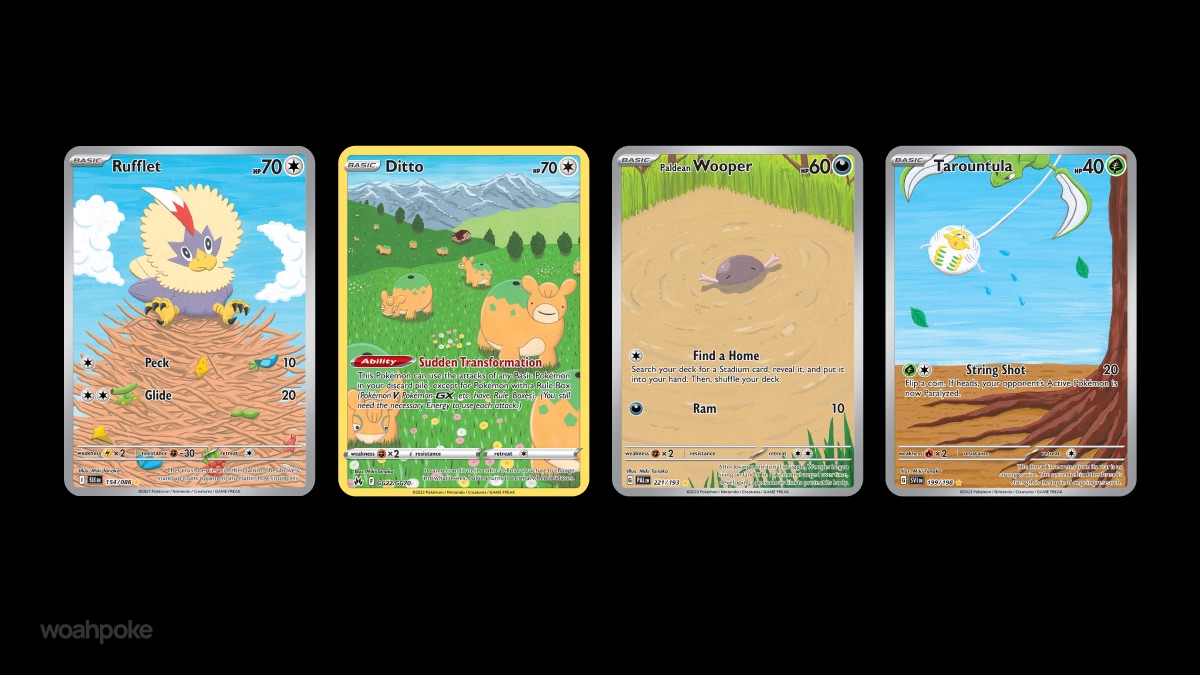
Tanaka has been drawing cards since 1997, and her work has a bright, happy, storybook quality that’s easy to love. She paints by hand in watercolor rather than going digital, favoring clean shapes, cheerful color, and wide natural scenes where the Pokémon get room to breathe. There’s a simplicity to her cards that always seems to be aiming for a smile, and it’s exactly why they make such lovely binder pieces.
Our Picks:
- Rufflet · Black Bolt #154 on eBay
- Ditto · Crown Zenith #GG22 on eBay
- Paldean Wooper · Paldea Evolved #221 on eBay
- Tarountula · Scarlet & Violet #199 on eBay
- Spidops ex · Scarlet & Violet #243 on eBay
- Larvitar · Obsidian Flames #203 on eBay
- Elekid · Neo Genesis #22 on eBay
Kazumasa Yasukuni
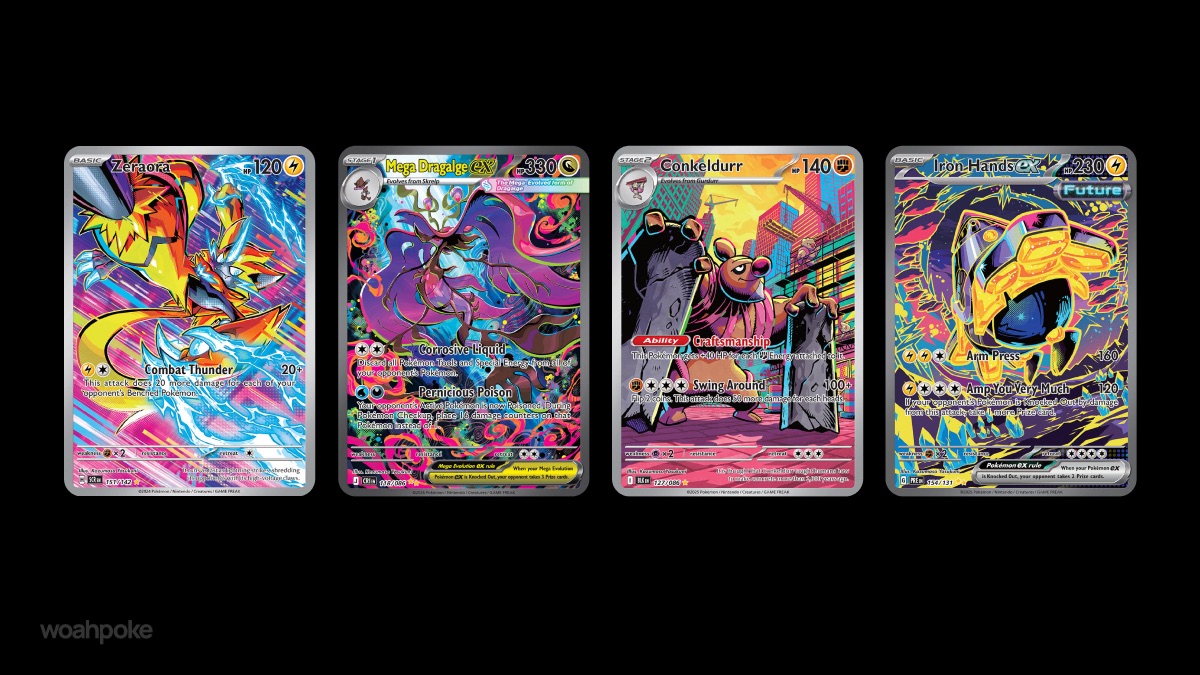
Yasukuni makes some of the most electric, psychedelic cards in the modern TCG. The palettes are cranked all the way up, with prismatic rainbow color streaking across the frame and Pokémon caught mid-explosion of movement, so every card feels like it’s buzzing with energy. He broke in as a semi-finalist in the 2022 Illustration Contest and made his official debut in Twilight Masquerade, and he’s quickly become a go-to for anyone who likes their cards bold and kinetic.
Our Picks:
- Zeraora · Stellar Crown #151 on eBay
- Mega Dragalge ex · Chaos Rising #118 on eBay
- Conkeldurr · Black Bolt #127 on eBay
- Iron Hands ex · Prismatic Evolutions #154 on eBay
- Team Rocket’s Wobbuffet · Destined Rivals #082 on eBay
- Moltres · Phantasmal Flames #014 on eBay
Sachiko Adachi
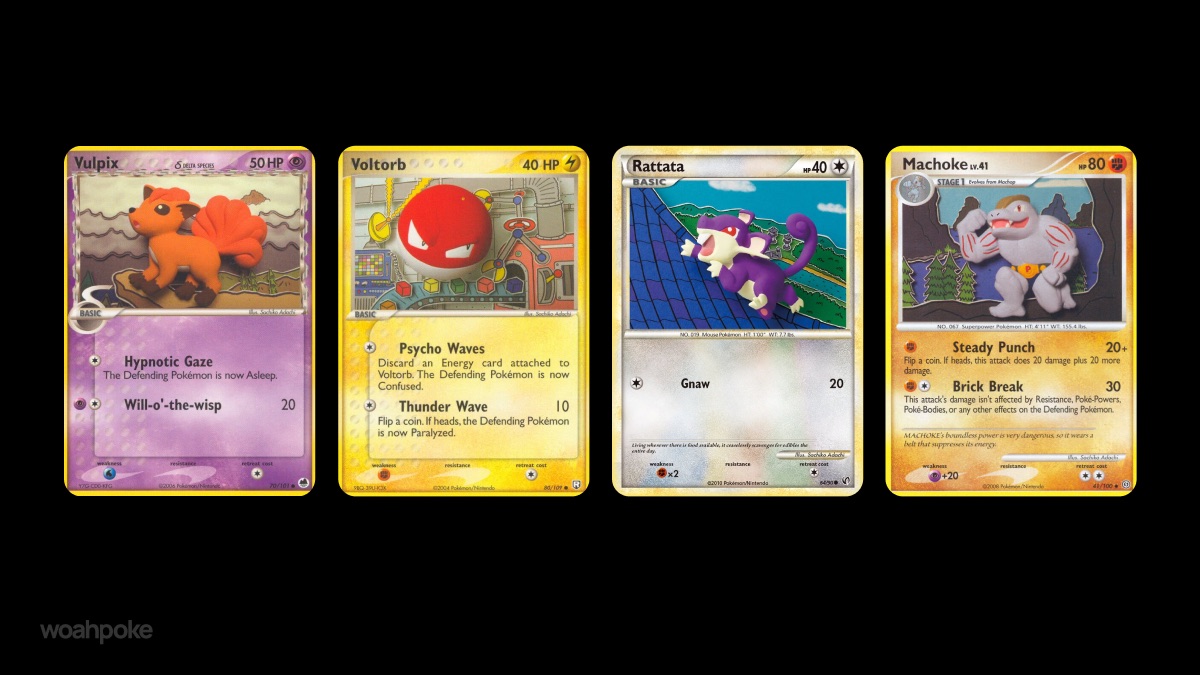
Adachi doesn’t paint her Pokémon, she builds them. Since 2004 she’s sculpted each one by hand in stone-powder clay and acrylic, but what sets her apart is everything else she works in: paper, cloth, wire, and string all find their way into her scenes, so a card might have real fabric texture or hand-shaped foliage in it. The result has a crafty, diorama-like warmth, less smooth than pure clay work and all the more charming for it. She’s a treat to track down for anyone who loves the handmade corner of the hobby.
Our Picks:
- Vulpix · Dragon Frontiers #70 on eBay
- Voltorb · Team Rocket Returns #80 on eBay
- Rattata · Undaunted #64 on eBay
- Machoke · Stormfront #41 on eBay
- Charmander · Power Keepers #48 on eBay
Asako Ito
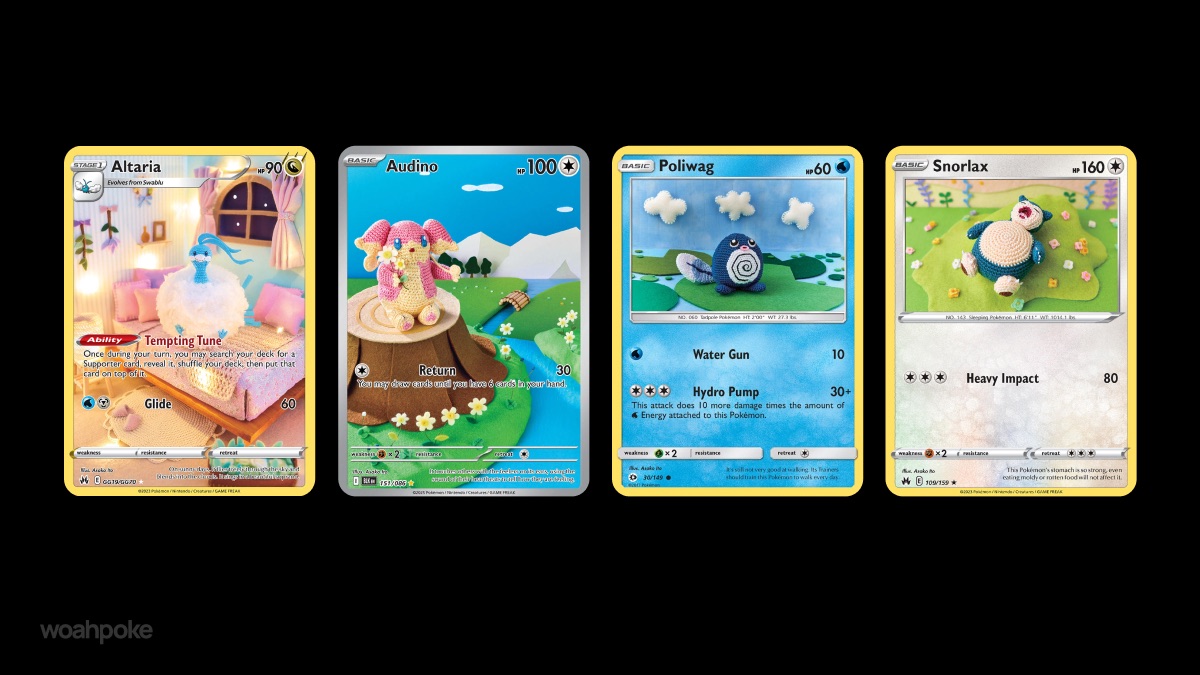
Ito’s cards are crocheted. She hand-stitches each Pokémon as a yarn amigurumi doll, builds a little diorama around it out of felt and craft paper, and photographs the whole scene, so what you’re looking at is a real object someone made by hand! The results are super cozy, all soft texture and warm light, and completely unlike anything else in the hobby. She debuted back in the Sun & Moon era on a Poliwag and has become a fan favorite since, and once you’ve seen one of her cards you’ll spot the stitches every time.
Our Picks:
- Altaria · Crown Zenith #GG19 on eBay
- Audino · Black Bolt #151 on eBay
- Poliwag · Sun & Moon #30 on eBay
- Swirlix · Silver Tempest #083 on eBay
- Snorlax · Crown Zenith #109 on eBay
That’s our running list of the best Pokémon card artists! We’re excited to keep adding to this round-up as we come across more great illustrators. Got a favorite artist we missed? Let us know in the comments.
woahpoke is supported by its audience · when you buy something using the retail links in our posts, we may earn a small commission at no additional cost to you. Read more about our affiliate disclaimer.
[…] one the most unique artists in the TCG, and you can see more in our best Pokémon card artists […]
[…] Akira Egawa card, and he’s one of our favorite card artists of the modern era. Jirachi is mid-wish against a swirl of deep space color, and the whole thing […]
[…] If you find this world interesting, we have a full round-up of the best Pokémon card artists and illustrators! […]
[…] want more on him and the other illustrators worth collecting by name, we went through them in our best Pokémon card artists […]
[…] have a full post on the best Pokémon card artists and illustrators if you want to find your new favorite to build a page […]