There’s no single right way to organize a Pokémon card collection, and it can feel like a bigger decision than it needs to be. The method that makes sense depends on what you’re collecting for, how many cards you have, and how you actually want to interact with your collection day to day.
Some collectors organize by set, some by Pokémon, some by what’s worth money. This guide covers every main method, what it’s good for, and who it works best for so you can figure out which approach fits where you’re at!
We’re a small team of two and our links keep woahpoke running. As an eBay Partner Network affiliate, we earn from qualifying purchases at no additional cost to you. Learn more.
First, Decide What Your Collection Is For
Before you buy a single binder or storage box, it’s worth knowing what your collection actually is. The way you organize a master set completion binder looks nothing like the way you organize cards by your favorite Pokémon. Getting clear on your goal first saves you a lot of reorganizing later.
Most collections fall into one of a few categories:
- Display collections (cards you love and want to show off)
- Set collections (building toward completing specific sets)
- Value collections (cards you’re tracking or planning to sell or grade)
- Or a mix of all three
It’s fine if yours overlaps. Just know which cards belong to which category, because they might end up stored differently!
How to Sort Your Pokemon Cards
These are some of the most popular approaches the community uses. Most collectors end up combining a few of them depending on what the card is and what it means to them.
By Set
Organizing by set is the most common method and the default for a reason. Every card has a set it belongs to, the numbering is built in, and it maps directly to how the TCG is actually structured. If you’re working toward completing sets, this is essentially mandatory. If you’re not, it still gives you a logical system that’s easy to maintain and easy to search.
Within a set, cards are sorted by their card number, which runs from lowest to highest and typically follows the Pokédex order for that set’s roster before getting into trainer cards, energy, and special rarities at the end.
The thing we don’t love about this method is that it can feel impersonal at scale, since your favorite cards end up wherever their number puts them. A happy medium is grouping cards that feel like they belong together within the set: pairing alternate arts with their base versions, keeping illustration rares near cards they share themes with, or pulling your favorites forward. You keep the logic of set order without the binder looking like every other one.
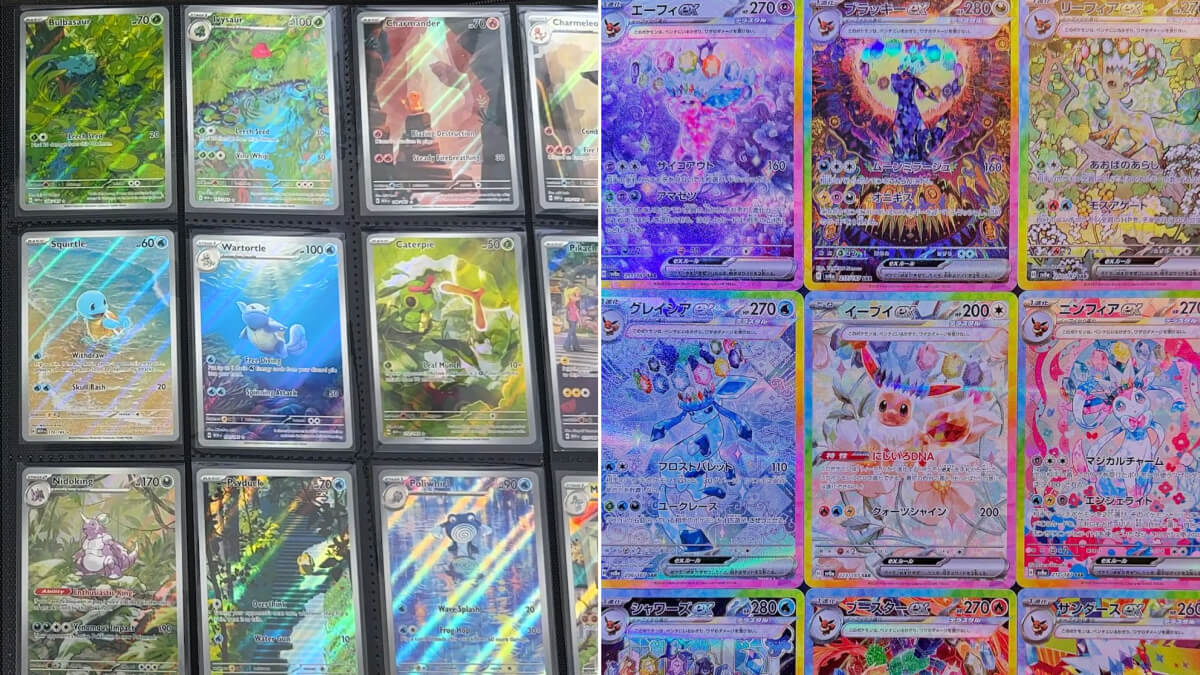
Binder pages by Watto Rips and @vault_collectables
By Pokémon
Organizing by Pokémon puts your favorites first. Every card featuring Charizard lives together, every Eevee evolution lives together, and so on. For collectors who focus on a specific Pokémon (called a PC or Personal Collection), this is usually the natural choice.
The challenge is that it doesn’t scale as neatly as set organization. As your collection grows, you’ll need a clear system for how you order the Pokémon themselves. Pokédex number is the most logical, but alphabetical works too. Within each Pokémon’s section, you can sort by set release date, card type, or just whatever looks best.
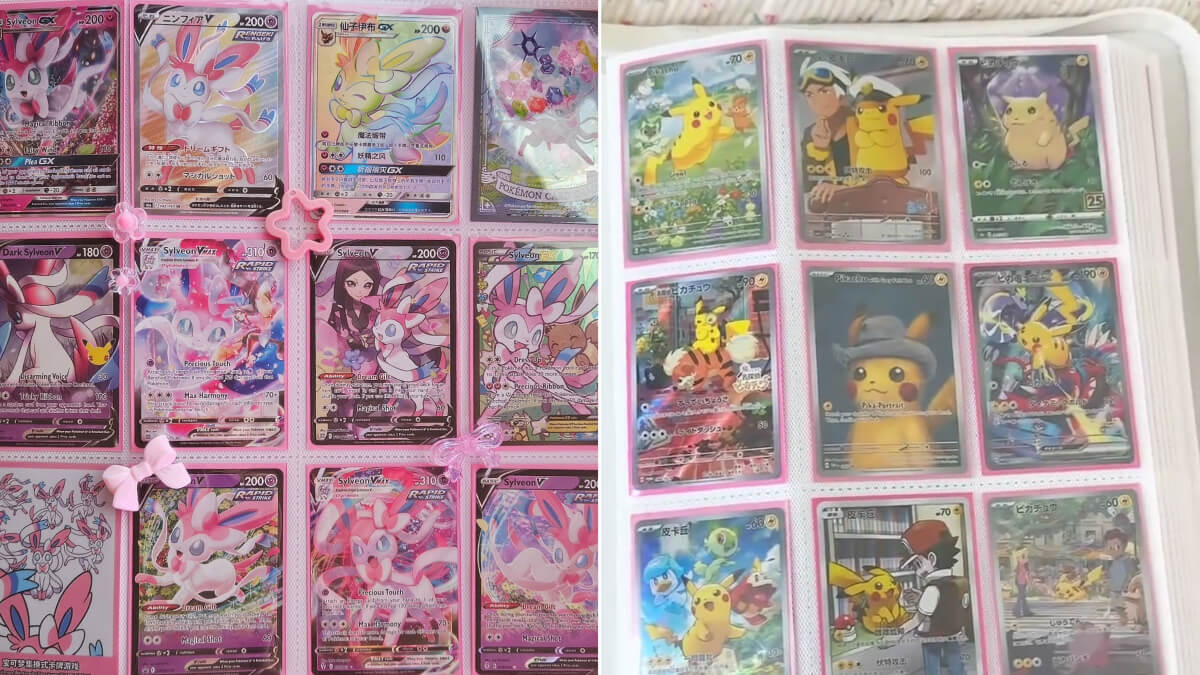
Binder pages by @seraveon and @miffyreader
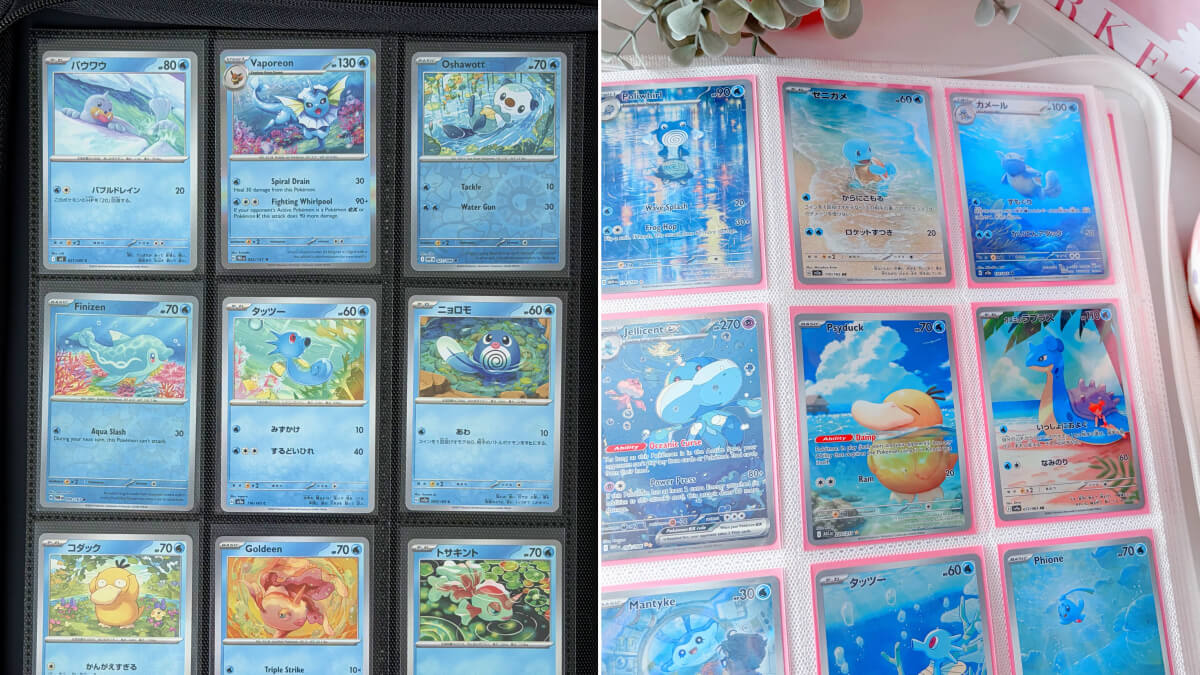
By Theme
Organizing by theme is the most personal and creative approach, and honestly one of our favorites. Instead of following a predetermined structure like set number or Pokédex order, you build sections around ideas that mean something to you.
That could mean grouping cards by type: all your Water types together, all your Psychic types in one section. It could mean building around a specific trainer and all the Pokémon associated with them, or Pokémon that share a vibe like ones working jobs, sleeping, eating, or just existing in cozy everyday scenes. Color-themed pages or binders are also a popular choice, especially for cards with striking illustration rare artwork.
There are no rules here, which is both the appeal and the challenge! If you’re looking for inspiration, we have a whole post on Pokémon binder ideas to help you find a theme that fits your collection.
If you’re looking for inspiration for a cute themed binder, our roundup of the cutest Pokémon cards is a good place to start! People love the Michi Method for theming up their binder, too.
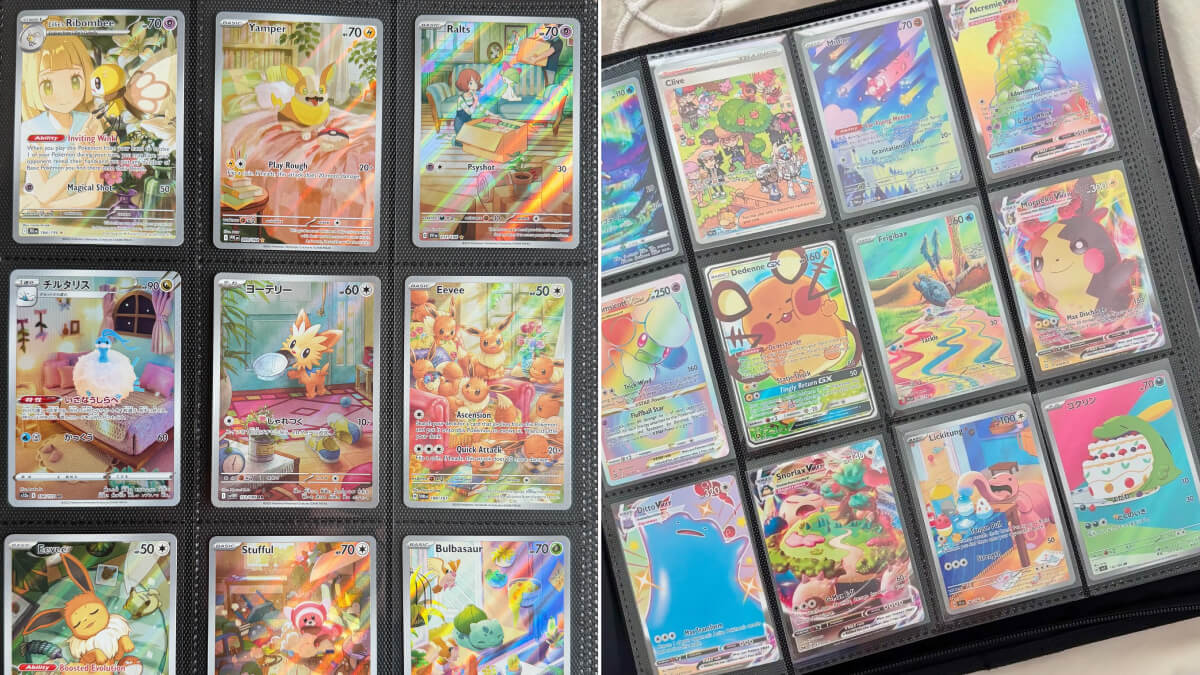
Binder pages by @pokejade_ and @imbabypoke
By TCG Era or Pokémon Generation
Organizing by Pokémon generation or TCG era: Gen 1 Pokémon together, Sword & Shield era together, vintage cards together, and so on, is a good middle ground between organizing by set and organizing by Pokémon. It groups cards in a way that feels intuitive, especially for collectors who have a nostalgic attachment to a specific period of the franchise or the card game.
Within each generation you can then sort by set, by Pokédex number, or by card type. It’s a flexible system that works well for mixed collections that span multiple eras of the TCG.

Binder pages by @plinks_cards and @kit.tcg
By Rarity or Card Type
Some collectors separate their cards by rarity: commons and uncommons in one place, rares in another, ultra rares and special illustration rares somewhere more prominent. This works well if you’re managing a large bulk collection alongside a smaller curated one, or if you’re regularly selling or trading lower rarity cards and want them easy to access without digging through everything.
A looser version of this is separating cards into tiers: bulk (commons and uncommons you don’t care about), collection (cards you’re keeping), and if you’re grading, grading candidates (cards in good enough condition to potentially submit). Keeping these physically separate makes the whole collection easier to manage.
Binder pages by us and @pokekarla
By Value
Organizing with value in mind usually means keeping high-value cards separate from the rest rather than mixing them in with everything else. It’s less of a primary organization system and more of a layer you add on top of whatever else you’re doing.
If you’re actively tracking prices or planning to sell, some collectors use a spreadsheet alongside their physical organization to log what they have, what it’s worth, and what condition it’s in. Tools like PriceCharting and Collectr make this easier, and you can tag cards by set, condition, and estimated value all in one place.

Binder pages by us
Binder vs. Storage Box
How you organize your cards is one decision. How you store them is another, and they’re not always the same thing.
Binders are the most popular display option and the best way to actually see and interact with your collection. Side-loading binder pages are generally preferred over top-loading ones because cards are less likely to fall out. 9-pocket pages fit standard sized cards and are the most common format. For valuable cards in binders, double-sleeving (a penny sleeve inside a binder sleeve) gives extra protection.
Storage boxes are the practical choice for bulk cards or large set collections. They come in various sizes measured in card capacity (100-count, 800-count, 5000-count) and keep cards upright and organized. Dividers and labels make navigation much easier as the volume grows.
A simple rule: use a binder for cards you want to look at and show people, use a box for bulk or cards you’re not actively displaying. Most collectors end up using both!

Setup by @trainerangel333
Sleeving
Almost every card worth keeping should be in a sleeve. Penny sleeves are fine for bulk and lower-value cards. For anything you care about, double-sleeve: a penny sleeve inside a top loader or binder sleeve gives you a good extra layer of protection.
Perfect fit sleeves sit closer to the card than penny sleeves and are a popular choice as the inner sleeve when double-sleeving, since they don’t add much bulk.
Whatever sleeves you buy, make sure they’re PVC-free. PVC sleeves are cheaper but can damage cards over time as the plastic off-gases. Most reputable brands (Ultra Pro, VaultX, KMC) are PVC-free, but it’s worth checking if you’re buying budget sleeves.
For cards you’re planning to grade, avoid sleeves with texturing or patterns on the back — they can leave marks on the card surface over time. Plain matte or clear sleeves are safer.
Tips for Keeping Your System Maintainable
The best organization system is the one you’ll actually maintain.
Sort new cards as they come in rather than letting them pile up. A small backlog is easy to deal with. A large one becomes a project you keep putting off.
Keep a small “to sort” box for cards you haven’t placed yet so they have a home while you decide where they belong.
If you’re tracking value, update your records (we use Collectr) when you sort rather than trying to go back and do it all at once.
Revisit your system every few months. Collections change shape as they grow, and a system that worked at 500 cards might not work at 2,000.
The Bottom Line
The best way to organize your Pokémon cards is whatever makes your collection easy to use and enjoyable to spend time with. Set order is logical and scalable. Pokémon order is personal and satisfying. Value-based organization is practical if you’re actively buying and selling. Most collectors end up combining a few of these depending on what the card is and what it means to them.
Start with what makes sense for your collection right now and adjust as it grows. Your system will find its shape over time!
How do you organize your collection? Drop your method in the comments — we’re always curious how other collectors approach it!
woahpoke is supported by its audience – when you buy something using the retail links in our posts, we may earn a small commission at no additional cost to you. Read more about our affiliate disclaimer.