There are more reasons to crack a slab than you might think. Maybe you bought a PSA 7 as a budget hack to get a near mint copy of a card for your binder. Maybe you want to re-submit for a higher grade.
Whatever the reason, cracking a slab is something people do, and it’s worth understanding how it works even if you never plan to do it yourself, since it affects how you should think about buying graded cards secondhand.
Do this at your own risk. Cracking a slab is irreversible and there’s always a chance of damaging the card if you rush it or use the wrong technique. We’re sharing this so you understand the practice and what’s involved, not as an endorsement. If the card has significant value as a graded copy, think carefully before proceeding!
Another important note: cracking a slab and reselling the card as raw without disclosing it was graded is considered bad practice in the community. Always be upfront if you’re selling a card that came out of a slab.
We’re a small team of two and our links keep woahpoke running. As an eBay Partner Network affiliate, we earn from qualifying purchases at no additional cost to you. Learn more.
Should You Crack Your PSA Slab?
Before you do anything, make sure it actually makes sense. A few things worth thinking through:
Buying slabs to crack is actually a legitimate strategy. Lower grades like PSA 7 or PSA 8 often sell for less than a comparable raw card, which means you can sometimes get a cleaner copy for less money by buying a graded 8 and cracking it than by hunting for a raw near mint. Just make sure the card looks good through the case before you commit.
Re-grading is risky. If you’re cracking to resubmit, be honest with yourself about whether the card actually has a realistic shot at a higher grade. Cracking a PSA 9 to chase a 10 is a gamble that doesn’t always pay off.
Once it’s cracked, the grade is gone. There’s no putting it back. If the card is a PSA 10 or a high grade vintage card, think carefully before cracking. The graded premium exists for a reason.
How to Crack a PSA Slab
The community’s most reliable method right now works on both old and new slabs: work around the entire perimeter with tile nippers or ear clamp pliers, then peel the two halves apart. It’s slower than the old corner snap but cleaner and safer for the card.
Tools you’ll need:
- Tile nippers or ear clamp pliers
- Flathead screwdriver (if needed)
Note: these tools go by a lot of different names depending on where you’re shopping: end cutters, ear clamp pliers, nail nippers, nail pullers, tile nippers, and wire nippers are all variations of the same basic tool. Any of them will work!
Cracking your slab:
- Put on eye protection.
- Using your tool, go around all four edges of the slab one at a time, making small bites or clips along the full length of each edge rather than focusing on the corners.
- Once you’ve gone all the way around, the two halves should peel apart. Start at one corner and lift.
- If it’s not separating cleanly, slide a flathead screwdriver horizontally along the top edge (above the slip) and twist gently to pop it open. Keep it horizontal and be aware of where it’s pointed. Never angled toward the card!
- Once the case is open, handle the card by the edges only. Put it straight into a penny sleeve, then a top loader. Don’t set it down on a surface without protection.
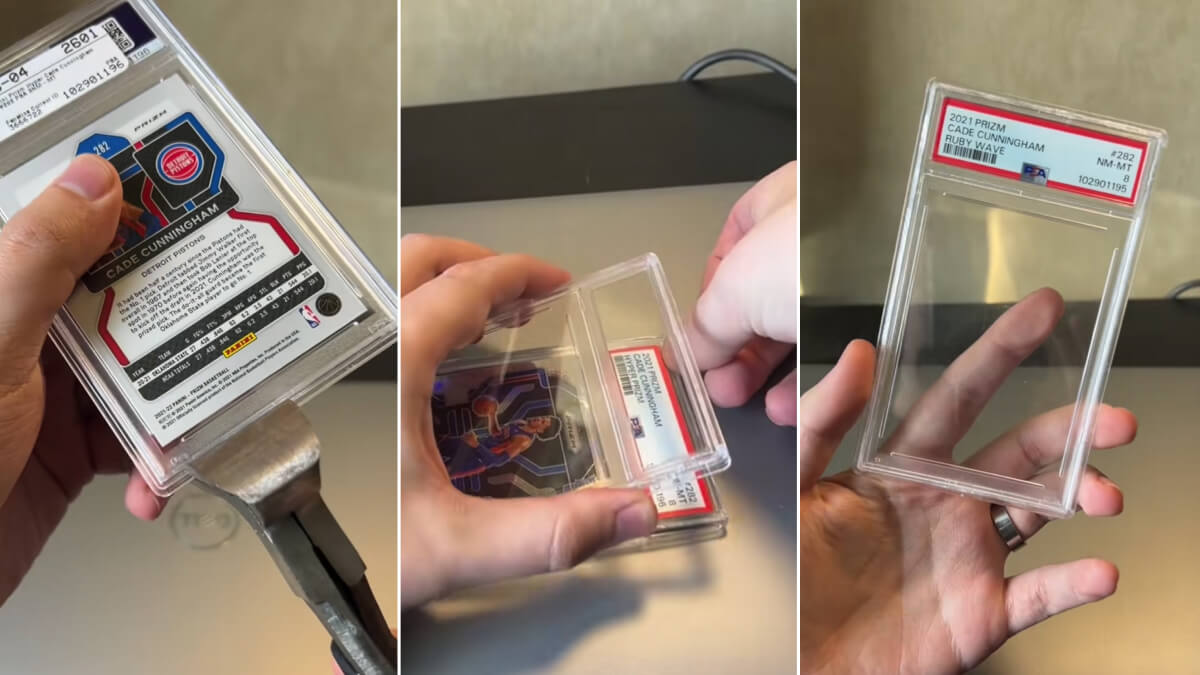
Visuals courtesy of @tradingcardboard
For a visual walkthrough of this method, here are a couple videos:
- Quick Slab Crack in Under 2 Minutes (YouTube Shorts)
- How to Crack a PSA Slab (TikTok)
- How to Crack a PSA Slab (YouTube)
- Cracking New PSA Slabs (YouTube)
Whichever method you use, don’t force it. Every mistake happens when someone tries to muscle it through. If it’s not moving, stop, reposition, and try again.
Which Slab Do You Have? Old vs. New PSA Slabs
PSA introduced a new slab design in 2025 called the 1LR, which is noticeably thicker, heavier, and more malleable than the older standard “21” case. You’ll see a lot of guides recommending the corner snap method (using a bottle opener or other tool), but this only works reliably on older “21” slabs. On 1LR slabs the plastic bends and dents instead of snapping, which risks damaging the card.
You can check which slab you have by looking at the bottom left corner on the back of the case, but it’s worth noting that PSA still uses “21” slabs on newer submissions too. We have 2025 cards that came back in them, so the marking tells you the slab type, not when the card was graded.
Either way, the perimeter method above is recommended specifically because it works on both!
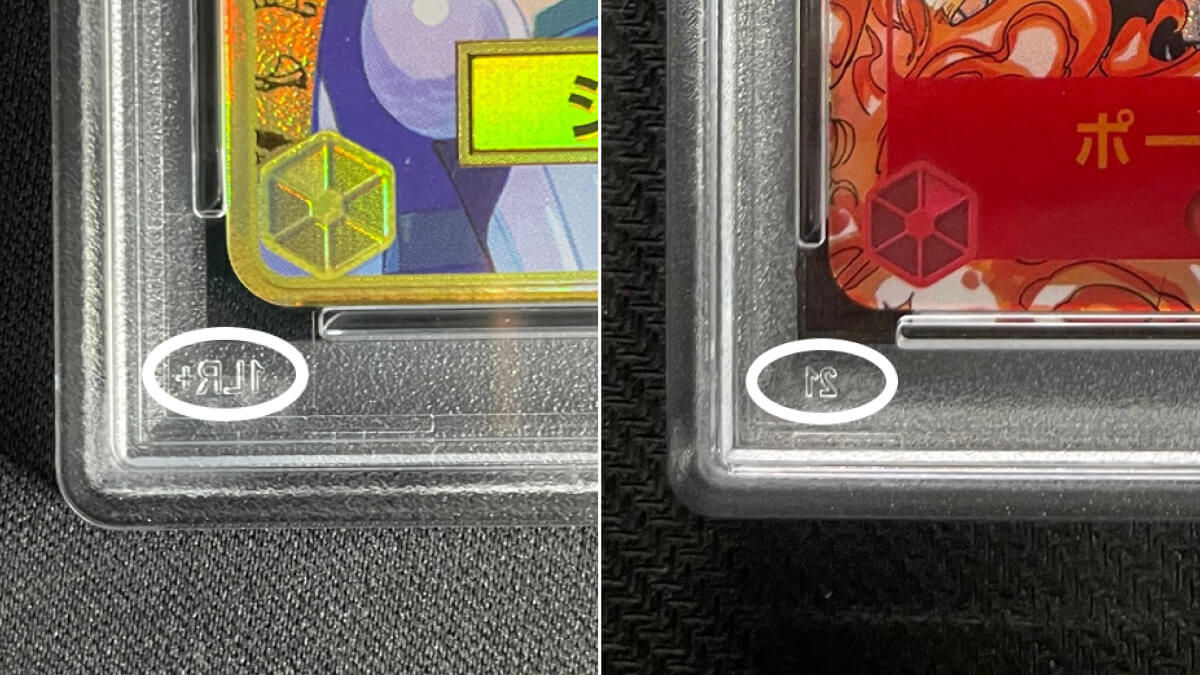
Photos courtesy of snkrdunk
Slab Cracking FAQs
Does PSA Crack Slabs?
No, PSA won’t crack your existing slab. If you want the card out, you’re doing it manually.
That said, they do handle cracking in specific professional contexts. If your slab is scratched, cracked, or damaged, you don’t need to crack it yourself. PSA offers a Re-holder service where they’ll transfer your card and label into a brand new case.
If you have a card in a competitor’s slab (BGS, CGC, etc.) and want it in PSA, you can request a Minimum Grade Crossover. PSA graders evaluate the card inside the competitor’s case, and if it meets your minimum grade criteria, they crack the slab themselves and put the card into a PSA holder.
Does Cracking a Slab Void the Grade?
Yes. Once the slab is open the grade is no longer verifiable and the card is considered raw. There’s no putting it back, and any buyer should be informed it came out of a slab.
Can You Crack a PSA 10?
You can, but think carefully before doing it. A PSA 10 carries a significant graded premium and once the case is open, that grade is gone permanently. Most collectors only crack a PSA 10 if they’re certain they can resubmit and maintain or improve the grade, which is a gamble that doesn’t always pay off. If you’re cracking a 10 just to put it in a binder, make sure the card is worth more to you raw than it is graded.
Will PSA Regrade a Card That’s Been Cracked Out of a Slab?
Yes. PSA will grade a card regardless of whether it was previously slabbed. Just submit it as you normally would. Worth noting that if you’re resubmitting hoping for a higher grade, the pop count from the previous grade will remain in PSA’s system unless you mail back the slip from inside the original slab.
What Happens to the PSA Population When You Crack a Slab?
As you’d expect, cracking a slab doesn’t automatically update PSA’s population count. The cert still exists in their system and the card still shows as graded. Population numbers are known to be somewhat inflated because of this, particularly for cards that get cracked and resubmitted for a higher grade. If you’re using pop reports to gauge rarity or value, the real number of slabbed copies in circulation is likely lower than what PSA’s database shows.
When PSA sends your card back in a slab, they include a slip inside the case. You can mail this back to PSA to have the cert officially removed from the population report, though most people don’t bother.
Is It Legal to Crack a PSA Slab?
Yes! You own the card and the slab, so cracking it is entirely within your rights. The only community expectation is that you disclose it was previously graded if you sell the raw card afterward. Selling a cracked slab card as raw without disclosing it is considered bad practice and will get you a bad reputation fast.
woahpoke is not responsible for any damage to cards or slabs resulting from following this guide. Crack at your own risk.
Have you cracked a PSA slab before? Drop your method (or your horror stories) in the comments below! If you found this guide helpful, it’s a good one to bookmark before you crack your first slab.
woahpoke is supported by its audience – when you buy something using the retail links in our posts, we may earn a small commission at no additional cost to you. Read more about our affiliate disclaimer.